How do you manage dust on a remediation site next to a residential neighbourhood?
Environmental remediation often involves excavation, earthmoving and the removal of potentially contaminated materials. These operations are necessary, but they can generate widespread dust, especially when working over large areas with machinery on the move.
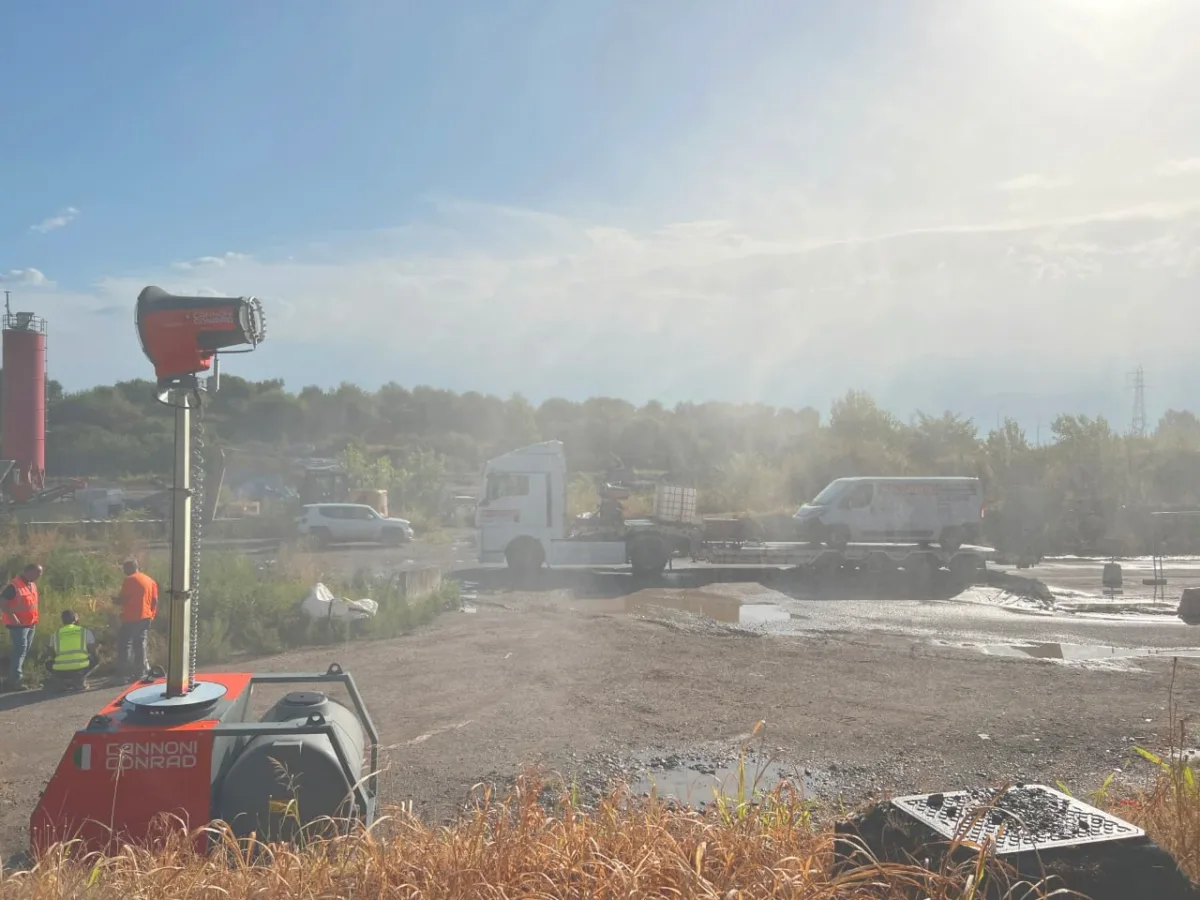
This was the case at the Santa Giulia remediation site in Milan, where the work took place close to a large residential neighbourhood. In a setting like this, containing the spread of dust is a priority to limit the impact of the work on the surrounding environment and on nearby homes.
The challenge is not just spraying water mist, but doing so continuously, directing the jet towards the areas where work is under way and adapting it to the needs of the site.
Which solution should you choose when dust risks reaching people’s homes?
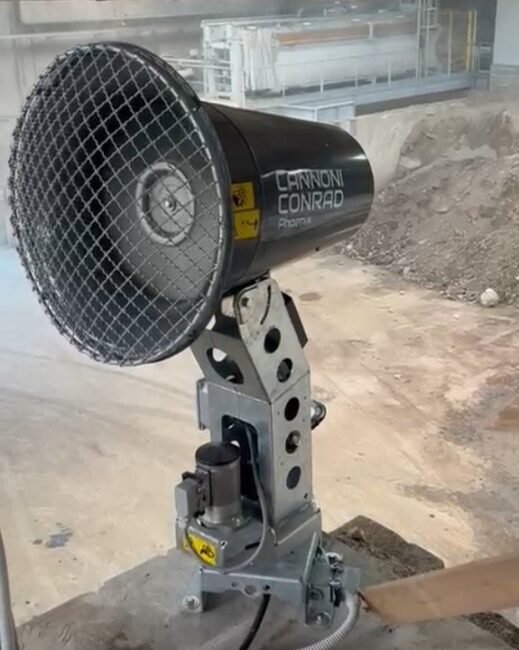
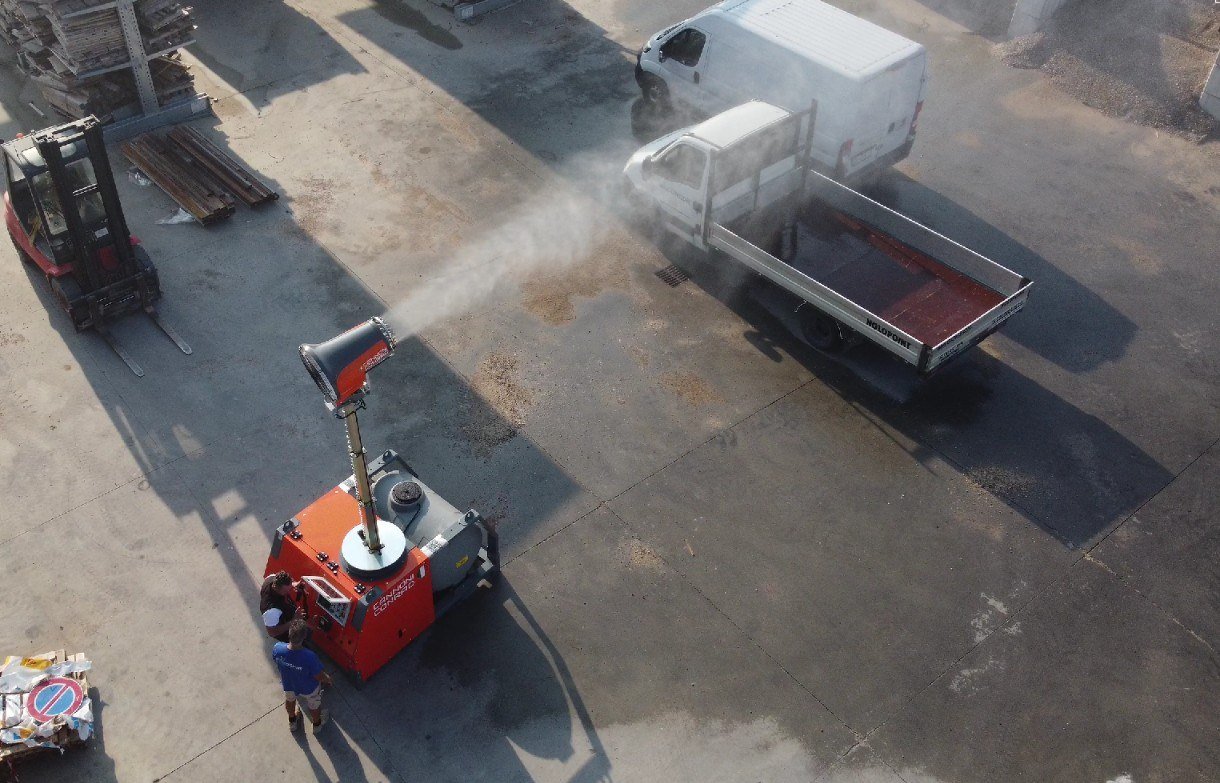
For this project, the contractor chose two HYDRA autonomous stations from Cannoni-Conrad, configured to support the remediation work and the excavation.
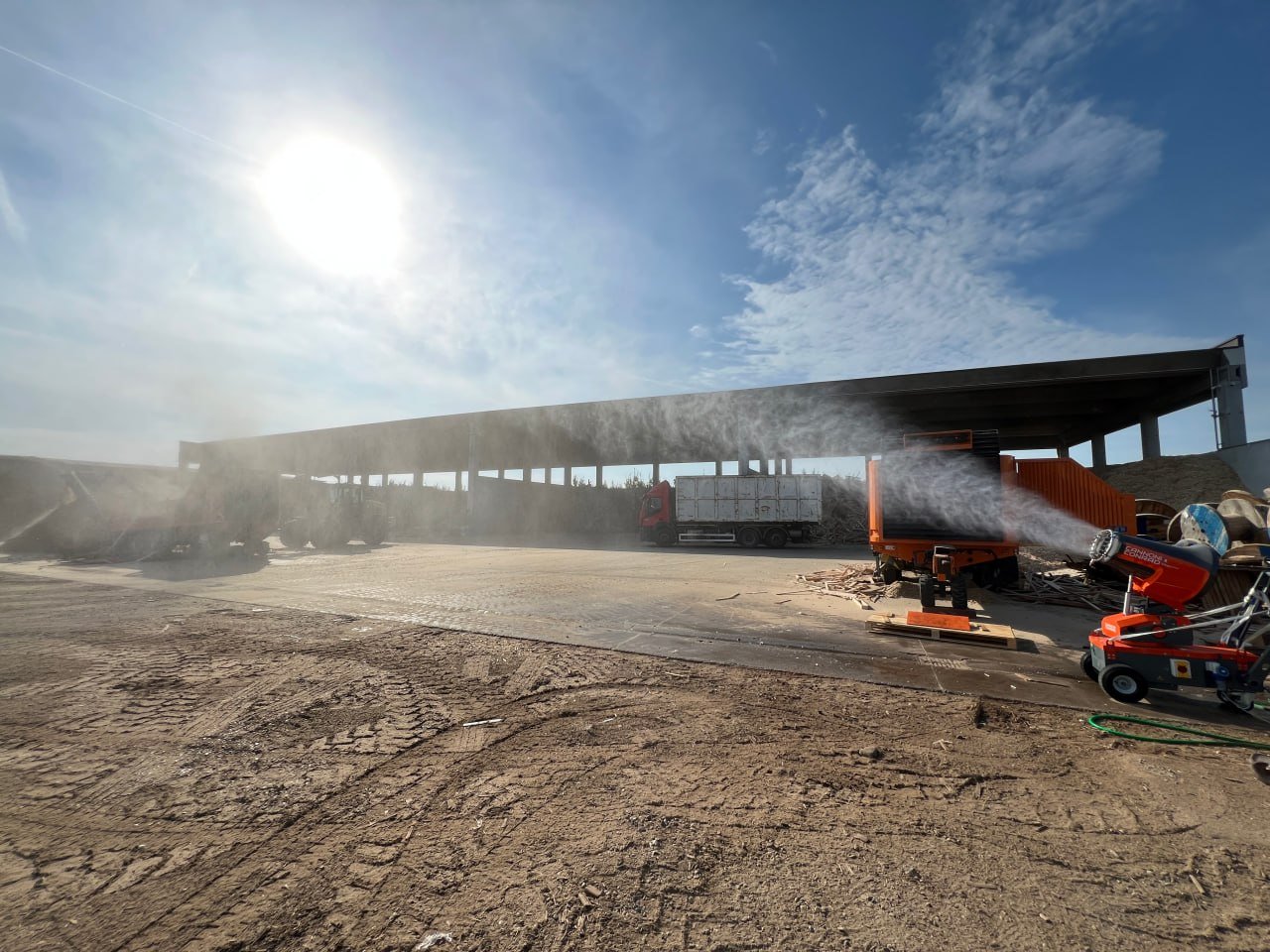
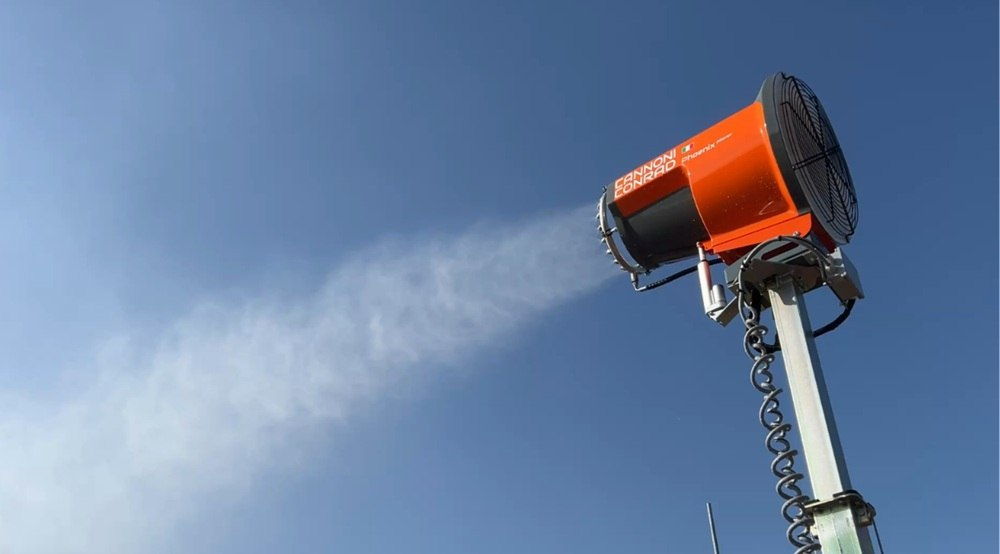
The working principle is high-pressure misting: the water micro-droplets capture the dust particles suspended in the air and help them settle. The jet can be aimed at the work areas, so that it acts close to the points where the dust is generated.
Being able to position the machines according to how the site is organised means the system can be adapted to the different phases of work, with the aim of reducing the spread of dust without getting in the way of excavation and earthmoving.
How do you keep work going while the machines are being set up?
Managing the supply called for specific organisation. While the two HYDRA stations were being set up to the contractor’s requirements, we supplied the site with dust suppression cannons for rent, so that a dust suppression system was available straight away.
Once the two HYDRA units were ready, we delivered them directly to the Santa Giulia remediation site and, at the same time, collected the cannons previously supplied for rent.
This coordinated approach allowed the contractor to carry on with the remediation work without delays, keeping operations running during the switch from the temporary solution to machines configured for its own needs. A service that combined the technical supply with logistics organised around the practical needs of the site.
Why choose an autonomous station for remediation work across the region?
The contractor carries out remediation work in several areas of Lombardy. For anyone working on different sites, having equipment that is easy to move and independent of external connections is a real operational advantage.
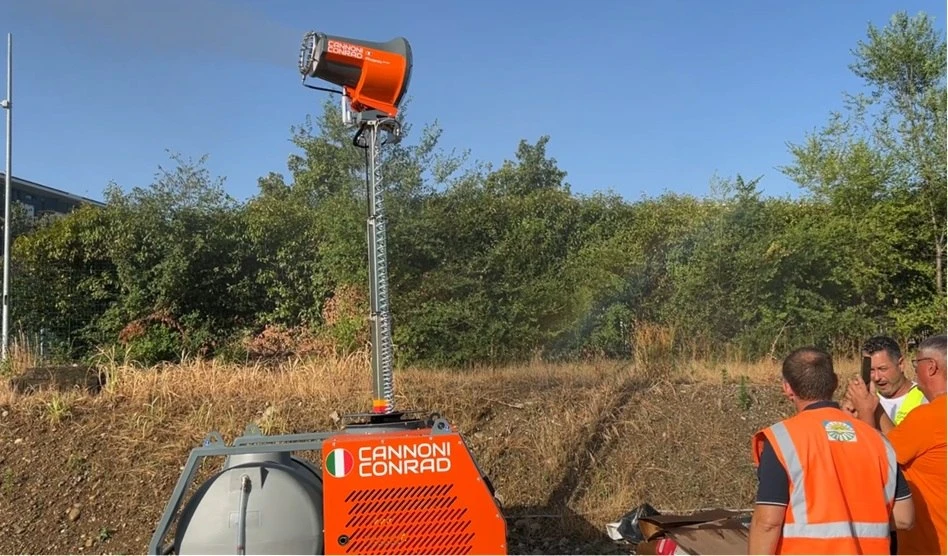
HYDRA combines the dust suppression cannon, the water tank and the generator set on a single frame. In the set-up chosen for this project, the diesel generator provides the power the machine needs to run, while the radio remote control lets operators manage the main functions from a distance.
Energy autonomy and the integrated water supply make it possible to work even in areas without dedicated connections, making it easier to position the stations and move them between sites. The radio remote control also makes the machines easier to manage, without the operator having to use the on-board controls for every adjustment.
For a contractor working on several sites, this configuration means having a misting system ready to follow the needs of each job, with less dependence on the infrastructure available in each area.
How do you prepare operators to use HYDRA?
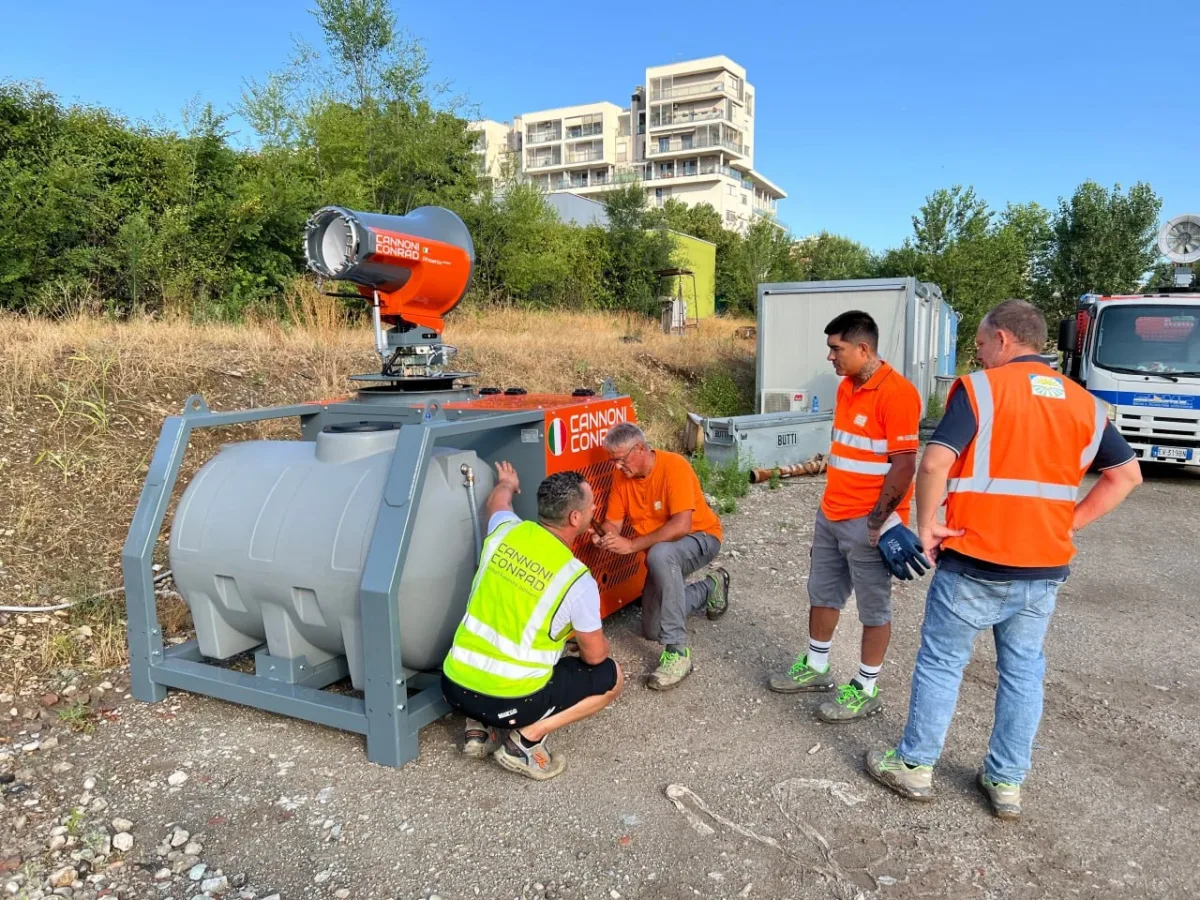
Delivery of the machines came with a training session for the operators who would be using them.
We explained how the stations work and how to use the main controls, with particular attention to the radio remote control and to organising misting operations on site.
Training is an important part of the supply: knowing what the machine can do allows staff to use it with confidence and make the most of it according to the operating conditions.
What do you get from a system designed around the needs of the site?
The Santa Giulia project shows how the choice of a dust suppression system has to take into account not only the type of work, but also the surrounding environment, the availability of water and power, and the way the contractor is organised.
With two HYDRA stations set up to order, an organised switch from rental to the final supply and training for the operators, Cannoni-Conrad supported the contractor in managing dust during the remediation work, in an area made particularly sensitive by its proximity to homes.
A solution designed to support work on site, with operational autonomy and flexibility of use.