Why does waste treatment generate dust in enclosed industrial buildings?
In October 2026 a major plant for the treatment and recovery of bulky waste was opened in the province of Reggio Emilia, designed to recover the different components of the incoming materials through mechanical and automated sorting processes.
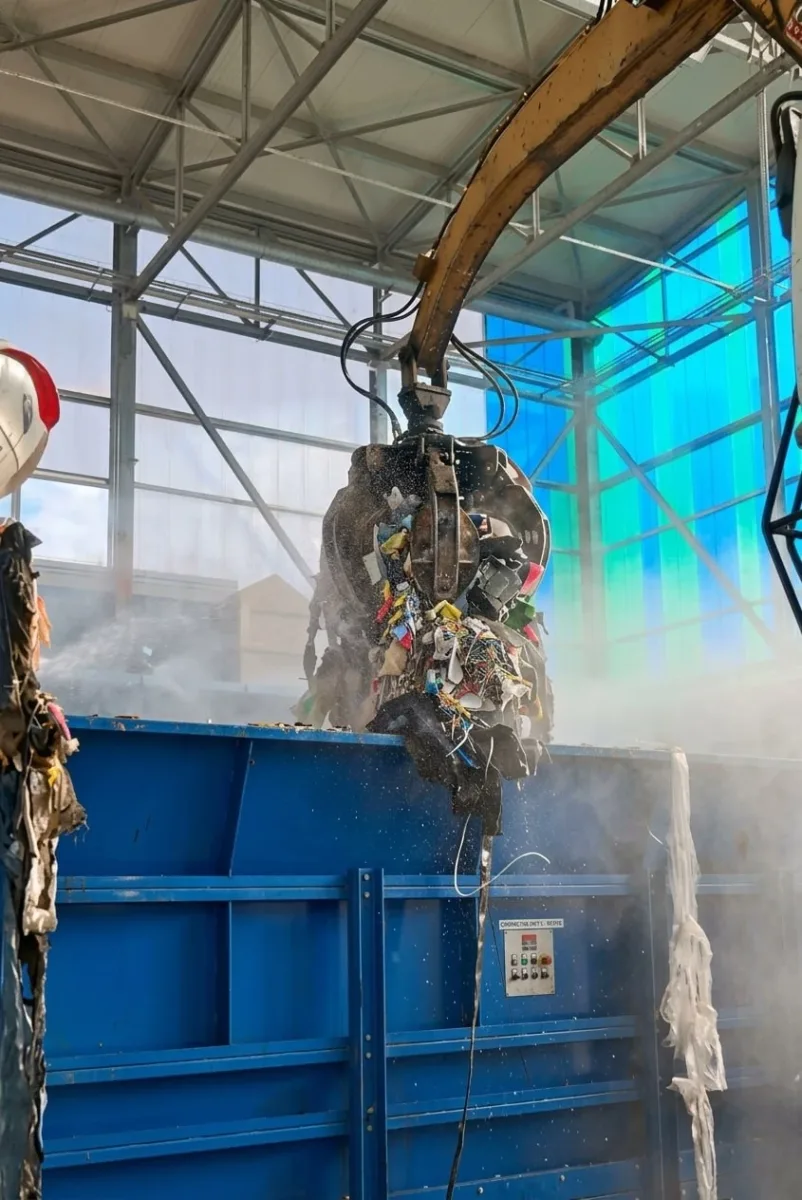
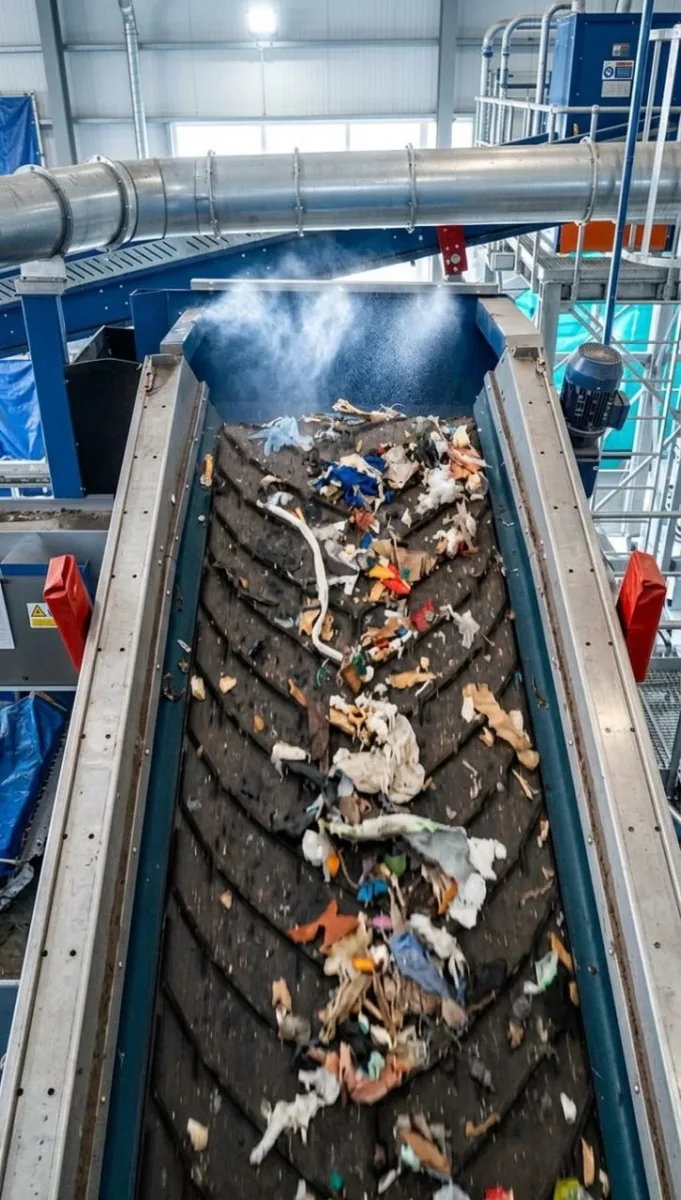
In plants of this kind, the material is loaded into the feed hopper by excavators fitted with orange-peel grabs and carried by conveyor belts to the next treatment stages. The ballistic separator splits the different fractions according to how the materials behave as they move: flat, rolling and fine fractions follow separate paths and are sent on to the next sorting and recovery operations.
During loading, falling material and transfers from one belt to another can generate fugitive dust emissions. When the process takes place inside an enclosed building, the spread of dust can affect air quality in the working areas, which calls for a containment system designed around the specific characteristics of the plant.
How do you act at the points where dust is generated?
For this project, Cannoni-Conrad was asked to design an industrial misting line for localised dust control.
The site inspection identified four critical areas: the loading hopper and three material transfer points at the separator outlet and along the conveyor belts.
The solution was developed with two high-pressure misting lines: one dedicated to the hopper and a second one, running through the structure of the plant, to reach the three emission points precisely.
The aim was not to spray the whole building indiscriminately, but to act close to the dust sources, where the material is handled and transferred. This approach concentrates the treatment on the areas actually affected by the problem.
How do you design a misting line inside a complex plant?
The main challenge was to integrate the system into a complex treatment line without interfering with the operation of the machinery or the material flows.
The first treatment point is the hopper, where the waste is unloaded by the loading machines. The second is where the medium-size fraction falls from the separator outlet. The third is the transfer from the conveyor belt to the intermediate hopper. The fourth is a further transfer between belts, where particularly fine and dusty waste material is handled.
To reach all the points, a line was built that runs through the plant along a complex route, designed to bring the misting exactly where it is needed.
Which technologies ensure reliability and continuous operation?
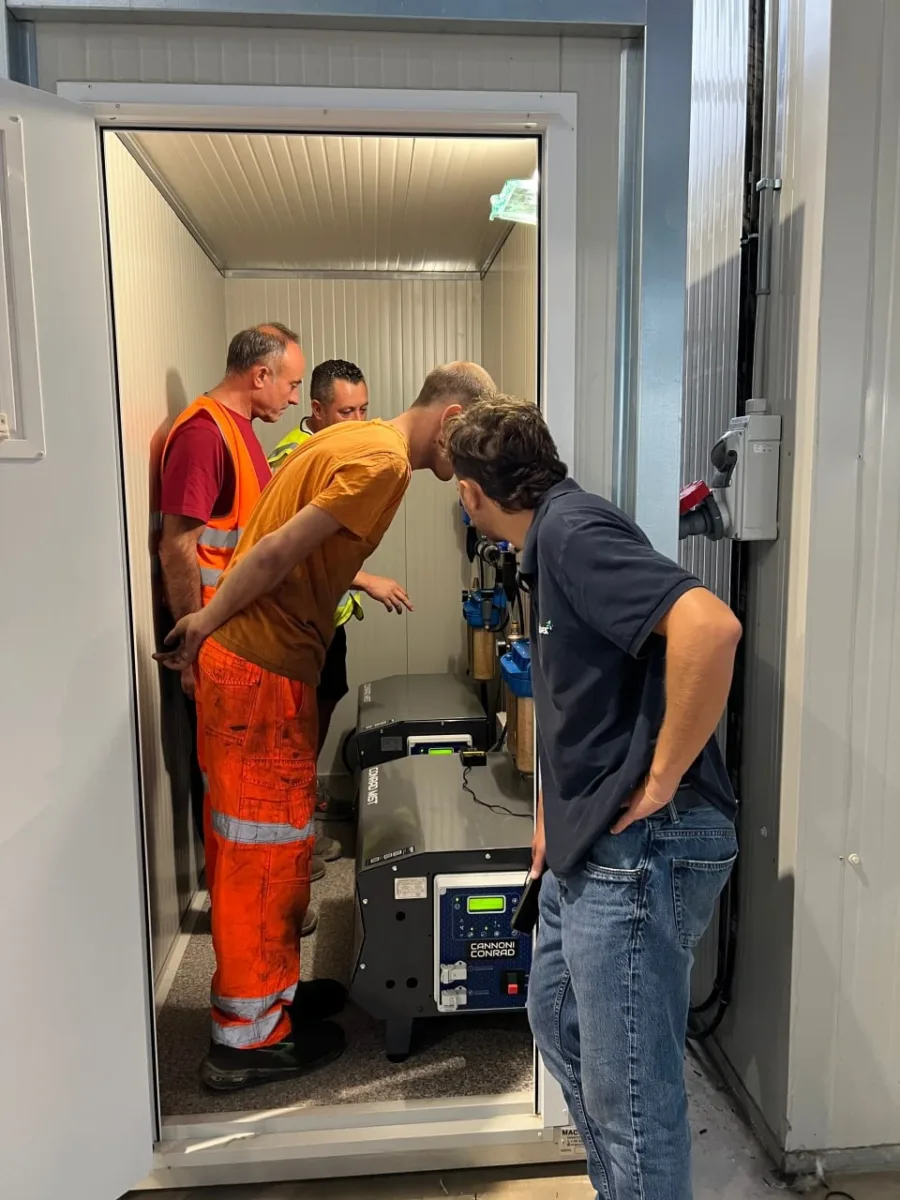
The supply was turnkey and included a prefabricated cabin housing two high-pressure pumping modules, one for each misting line.
The system includes a water filtration unit and a doser for a specific additive to treat particularly hard water. The aim is to limit limescale and deposits, protecting the components and maintaining the efficiency of the system over time.
A UV lamp was also installed to treat the water, to reduce the microbiological risk linked to the possible presence of Legionella.
How do you automate dust suppression during work?
To meet the customer’s operational needs, the pumps were fitted with PLCs, which allow both work cycles to be programmed and switch-on and switch-off time slots to be set.
Radio remote control was also provided, so that the machine operator in charge of loading the waste can switch on the misting when needed, according to the operations under way.
Automated management, on the other hand, makes it possible to programme the lines according to how production is organised, making the system flexible and adaptable to the different processing stages.
Why choose a custom-designed misting line?
In a waste sorting plant, dust control requires an analysis of material flows, drop points and the characteristics of the environment.
With this installation, Cannoni-Conrad has built an integrated high-pressure misting system, designed to act locally on the four critical areas and to fit in with the production process.
A custom solution for waste treatment and recovery plants, where managing fugitive emissions has to go hand in hand with continuous operation, maintenance and safety in the working areas.