Industry 4.0 was perhaps the second most used term after “virus” in 2020 and 2021.
It is fair to say that the Industry 4.0 Plan and the pandemic caused by the virus are indeed linked, in fact this tax incentive is proving to be a real remedy for the severe crisis in the economic sector.

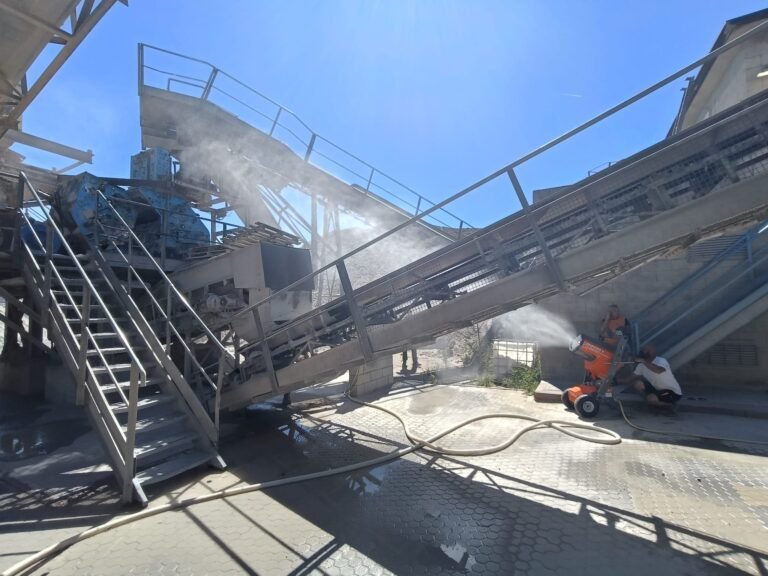
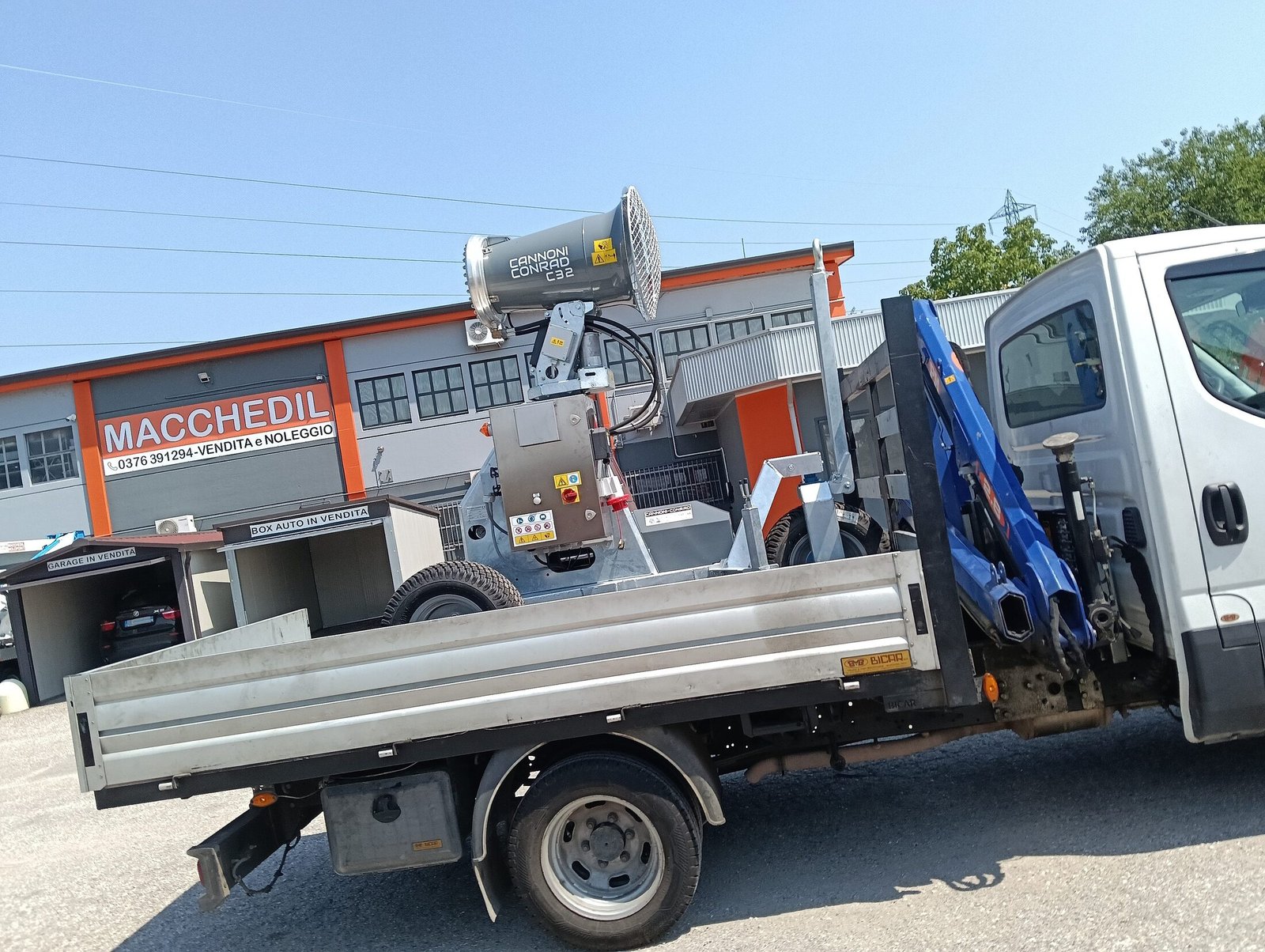
The dust suppression cannons Cannoni Conrad Industry 4.0:
Also dust suppression cannons equipped with PLC can contribute to the Industry 4.0 transition because they are already equipped with a PLC and therefore only need to be implemented with our next-generation identification tracking kit that can make the machine interact with the operators in the factory and allow the plant to interact with the other machines on the site for continuous feedback of productivity and planning of the work ahead.
The Cannoni Conrad system meets the requirements of INTERCONNECTION namely
- can exchange information with internal systems (e.g.: management system, systems
planning, product design and development systems, monitoring, including remote monitoring and control, other machines in the plant, etc.) and/or external (e.g.: customers, suppliers, partners in collaborative design and development, other production sites, supply chain, etc.) by means of a connection based on documented, publicly available and internationally recognised specifications (examples: TCP-IP, HTTP, MQTT, etc.); - is uniquely identified, in order to recognise the origin of the information, through the use of internationally recognised addressing standards (e.g. IP address).
The asset will therefore benefit from a 50% tax credit, accrued in the tax year of the investment (in this case 2021)
And not to be underestimated: this tax credit is not taxed for IRPEF, IRES and IRAP purposes.
What Industry 4.0 means
Industry 4.0 means a process that makes industrial production automated and interconnected, carried out by smart, connected machines that communicate over the internet. It is considered the “fourth industrial revolution”, centred on the digitalisation and computerisation of the production chain that leads to the final product, which is “smart” thanks to its internet connection. The Factory 4.0 is therefore not just the introduction of new technologies in a company, but a genuine reconfiguration and re-engineering of the production process.
What are the capital goods eligible under the Transition 4.0 plan?
Eligible goods are those listed in Annex A to the2017 Budget Law ("Assets functional to the technological and digital transformation ofenterprises according to the 'Industry 4.0' model") and can be grouped (withreference to Annex A) into three categories:
- Capital goods whose operation is controlled by computerised systems or managed through appropriate sensors and drives.
- Systems for quality assurance and sustainability.
- Devices for human-machine interaction and for improving ergonomics and safety in the workplace in 'INDUSTRY 4.0' logic.
What advantages
A tax credit is granted to all companies that invest in new capital goods intended for production facilities located in the territory of the State under the following conditions:1. Technologically advanced tangible capital goods (Annex A, Law No. 232 of 11 December 2016 – formerly hyper-depreciation)
2021
- 50% of the cost for the investment portion up to EUR 2.5 million
- 30% of the cost for the portion of investments exceeding EUR 2.5 million and up to the total eligible cost limit of EUR 10 million
- 10% of the cost for the portion of investments between EUR 10 million and up to the total eligible cost limit of EUR 20 million.
2022
- 40% of the cost for the investment portion up to EUR 2.5 million
- 20% of the cost for the portion of investments exceeding EUR 2.5 million and up to the total eligible cost limit of EUR 10 million
- 10% of the cost for the portion of investments between EUR 10 million and up to the total eligible cost limit of EUR 20 million.
From 2023 to 2025
- 20% of the cost for the investment portion up to EUR 2.5 million
- 10% of the cost for the portion of investments exceeding EUR 2.5 million and up to the total eligible cost limit of EUR 10 million
- 5% of the cost for the portion of investments between EUR 10 million and up to the total eligible cost limit of EUR 20 million.
The tax credit may be extended until 30 June 2026 provided that by 31 December 2025 the relevant order has been accepted by the seller and down payments of at least 20 per cent of the acquisition cost have been made.
These are the requirements a dust suppression cannon must meet to be classified as Industry 4.0
All machines listed above must be equipped with the following features:
- control by means of CNC (Computer Numerical Control) and/or PLC (Programmable Logic Controller);
- INTERCONNECTION to factory computer systems with remote loading of instructions and/or part programmes;
- automated integration with the factory's logistics system or supply network and/or with other machines in the production cycle;
- simple, intuitive human-machine interfaces;
- compliance with the latest occupational safety, health and hygiene standards;
In addition, all these machines must have at least two of the following features to make them comparable to or integrable with cyber-physical systems:
- remote maintenance and/or remote diagnostics and/or remote control systems;
- continuous monitoring of working conditions and process parameters using appropriate sensor sets and adaptability to process drifts;
- integration between the physical machine and/or plant and the modelling and/or simulation of its own behaviour during the process (cyber-physical system).
Timeline of the Industry 4.0 Plan

The new 'Transition 4.0 Plan'
In September 2016, the National Industry 4.0 Plan was presented, later incorporated into the
2017 Stability Law, with the aim of making entrepreneurs' investments more innovative. The 4.0 plan (transformed from Industry 4.0 into Impresa 4.0) has been extended year after year, with some variations
in subsidy rates, but still in the form of the hyper-amortisation, until the end of 2019.
Law no. 160 of 27 December 2019 (2020 Budget Law) created the Transition 4.0 Plan.
Law No. 178 of 30 December 2020 (Budget Law 2021) officially introduced theNew Transition 4.0 Plan