



How should dust be managed in a large crushing and screening plant?
At a major aggregate crushing and screening plant in the province of Brescia, dust control is a key consideration both for the management of operations and for the quality of the working environment.
The handling of materials and the constant movement of heavy goods vehicles can, in fact, cause dust to be stirred up and dispersed into the surrounding areas, making it necessary to have a dust suppression system capable of operating continuously and in a targeted manner.
For this project, we began – as always – by analysing the plant’s actual requirements.
Why is an on-site inspection essential when choosing a nebuliser?
Before identifying the solution, we carried out a technical site survey, checking the layout of the area, the distances to be covered and, above all, the points where the most critical issues were concentrated.
The measurements revealed two areas where heavy goods vehicles pass through continuously, where the traffic caused a particularly significant amount of dust to be stirred up, with repercussions for neighbouring areas and working conditions.
The requirement was therefore to provide effective coverage of the transit areas, without resorting to fixed solutions that would be difficult to adapt to the plant’s various operational needs.
Two LC50R units to cover the areas used by heavy goods vehicles
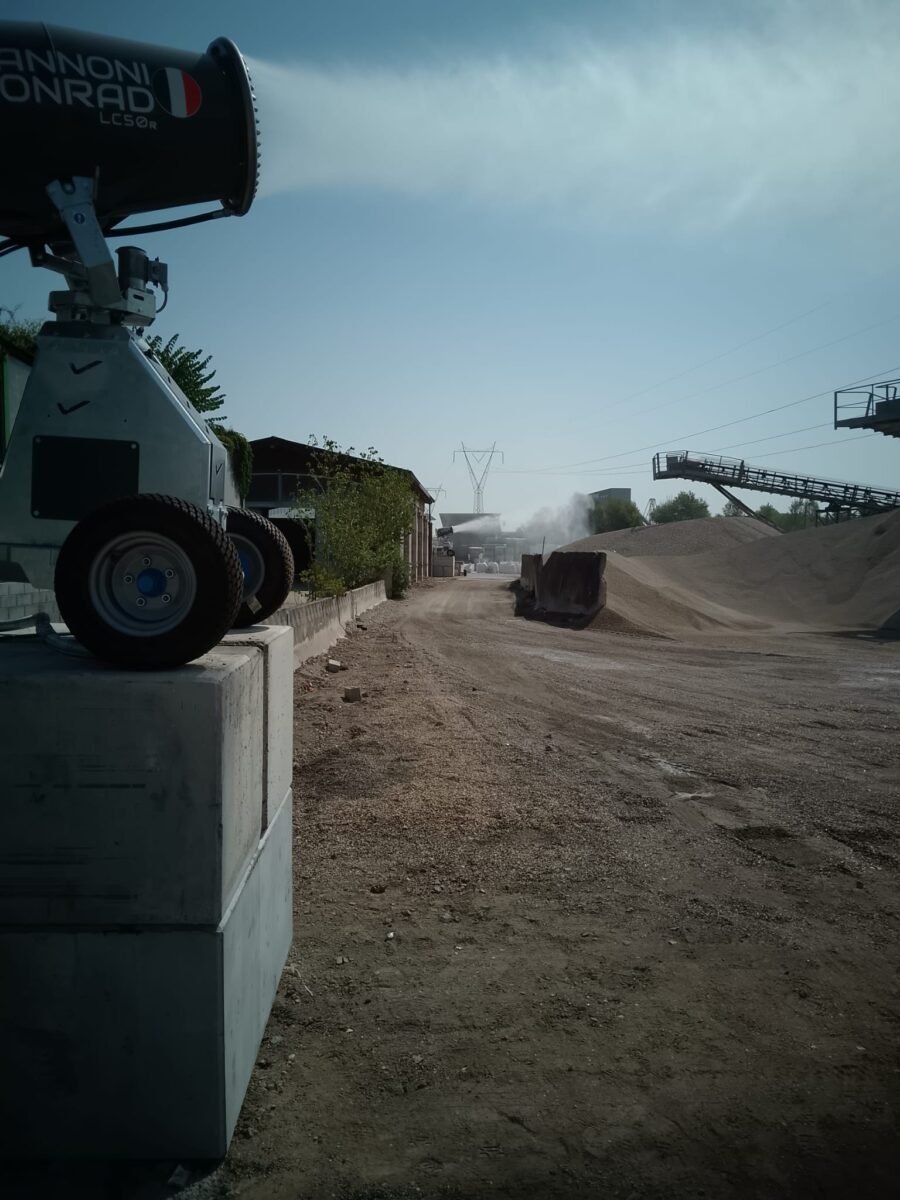
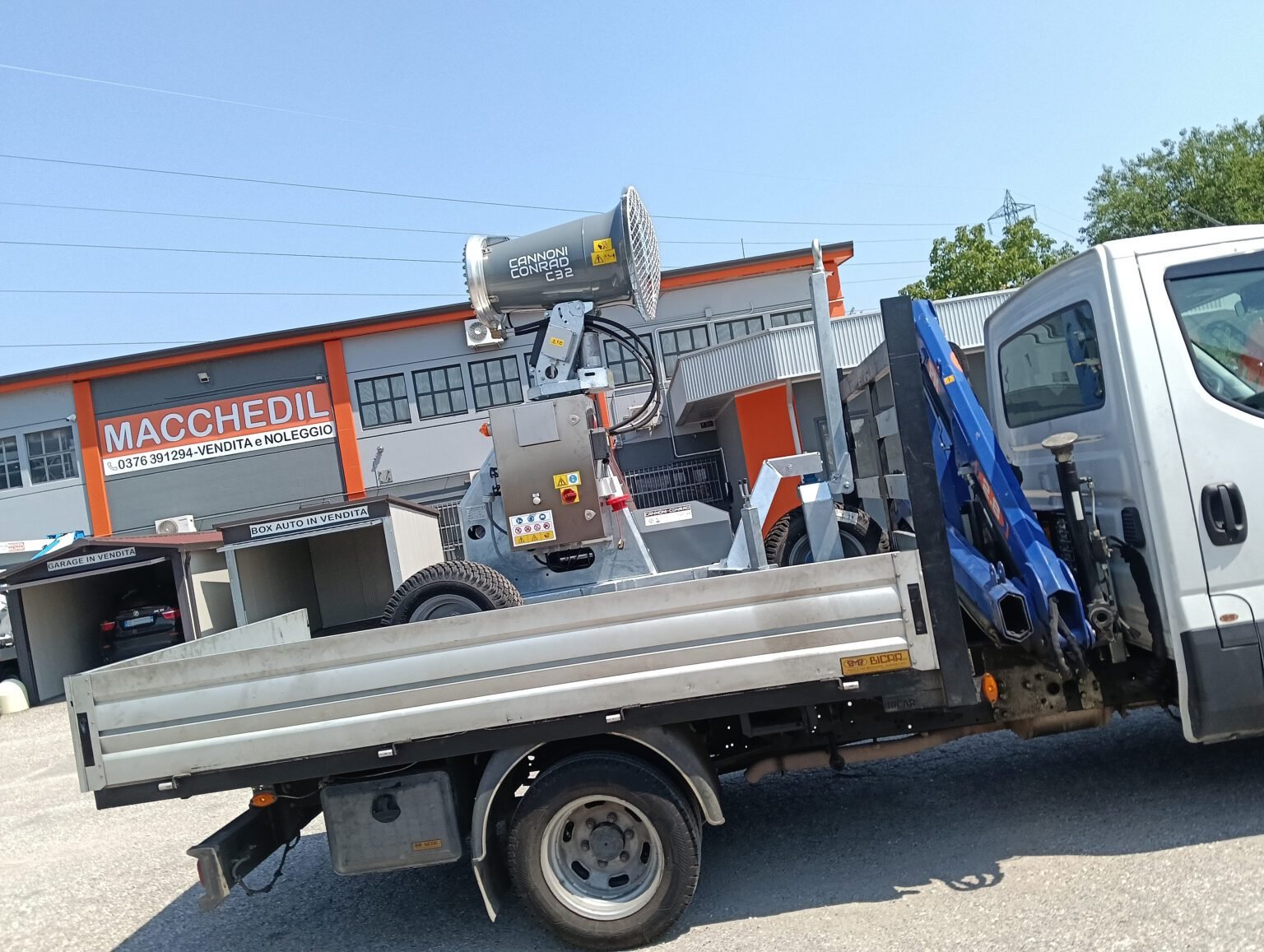
The solution adopted was the installation of two LC50R Cannoni Conrad mist blowers, each with a range of up to 50 metres.
The decision to use two machines makes it possible to target the two main thoroughfares identified during the site survey, ensuring focused coverage of the areas where vehicle movement was the main source of dust generation.
The long spray range makes it possible to treat large areas whilst keeping the machines in a strategic position, whilst the atomisation allows for direct control over the dispersion of particles in the air.
How can dust monitoring be automated?
In a plant of this size, an abatement system must also be easy to manage.
For this reason, the two LC50R units have been fitted with a timer for hourly programming, which allows the operating cycles to be set according to the system’s requirements and the times of peak activity.
The machines are also fitted with Industry 4.0 kits and radio remote controls for remote operation. The operator can therefore control the operation of the sprayers without having to go to each machine in person.
A solution that combines dust suppression, automation and remote management, making the system more seamlessly integrated into the plant’s day-to-day operations.
And inside the plant? An even more precise solution is needed
Whilst the main problem in the outdoor areas was linked to heavy goods vehicles passing through, the situation inside the plant was different.
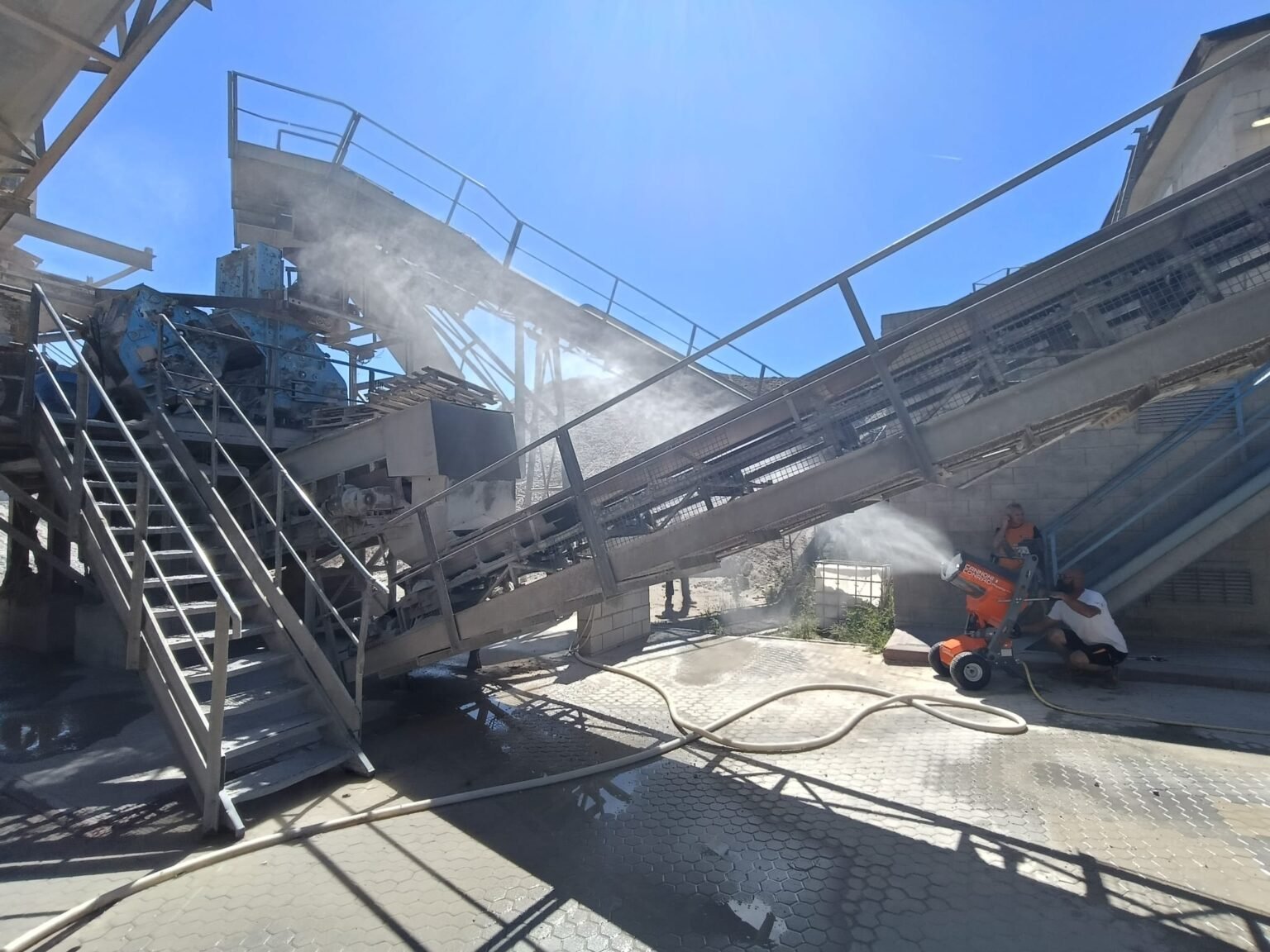
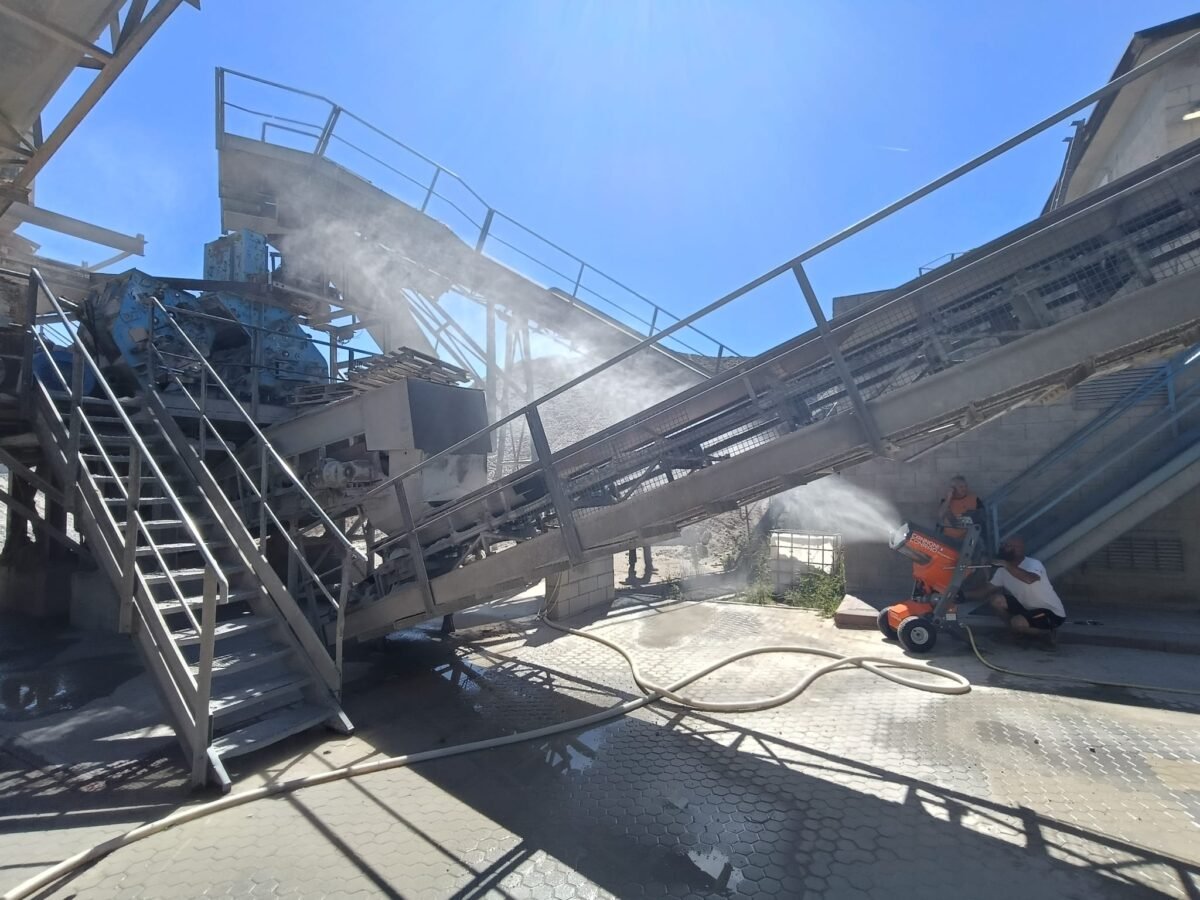
The main issue here was the dust produced during the crushing of the material. For this reason, we supplemented the two LC50R units with a Phoenix Plus, designed to provide more targeted intervention in the production areas.
The Phoenix Plus is particularly well suited to this type of application thanks to its compact size and the fact that it can be carried and positioned manually wherever it is needed.
Why choose a compact machine for the most critical emissions?
In an industrial plant, not all situations require the same type of intervention.
Alongside machines with a long spray range, which are useful for covering large areas, it can be essential to have a more compact and easily repositionable sprayer.
The Phoenix Plus does exactly that: it allows for more precise control over critical emissions, adapting to the process requirements and quickly repositioning the machine when the area to be treated changes.
The result is a system comprising several complementary technologies: two LC50R units for dust management in transit areas and one Phoenix Plus unit for more precise control within the plant.
A solution designed not simply to spray water, but to tailor dust control to the various operating conditions at a major crushing and screening plant in the province of Brescia.