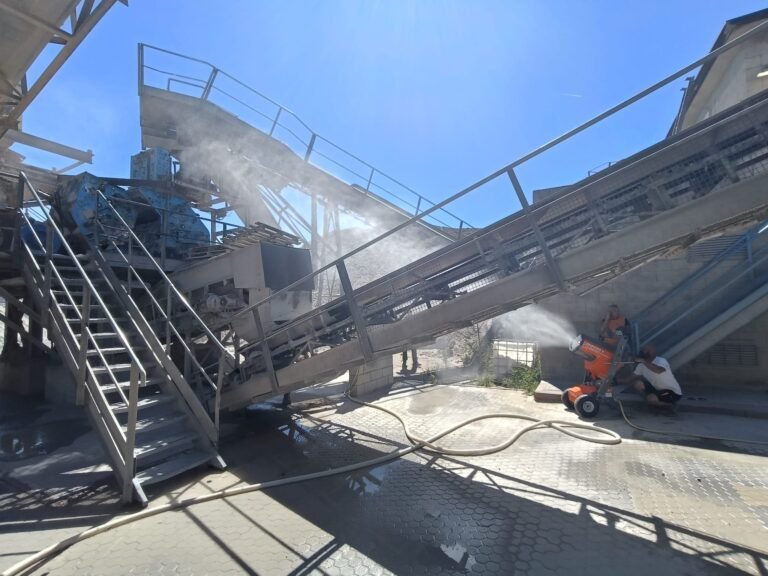
Anyone working in the ecology and environmental sector knows well that fixed misting systems, known as “curtain” systems, are effective for dust and odour suppression. Many landfills and waste disposal depots already have them, but more and more often they contact us because the yield is not sufficient, and this is the actual case of the landfill in Carrara.
The problem: during the loading and unloading of street sweepings*the strong odour released by the dust from these residues reached nearby homes and businesses and lingered for a few hours.
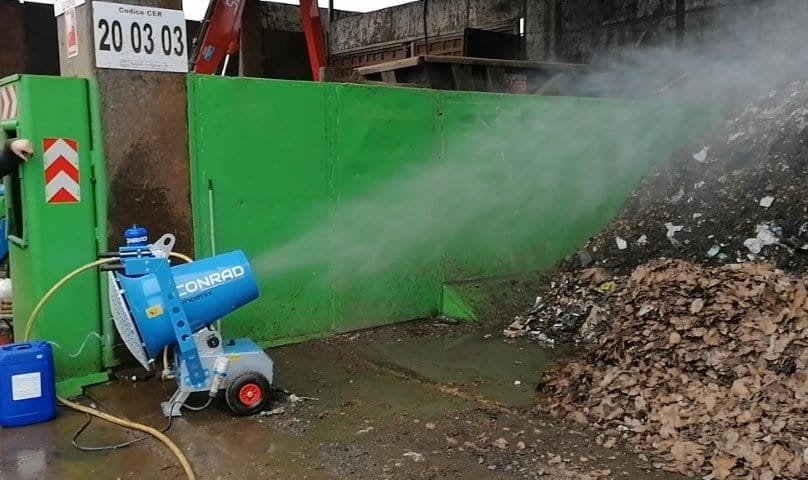
The simple and practical solution was to choose the Conrad Phoenix water mist cannon equipped with a dosing pump for the Maleo odour-control product.

In the video below you can see how the targeted, precise action of the dust suppression cannon supports the orange-peel grab during the loading of the material to be disposed of.
The dosage of the odour-abatement product was set to a minimum and enabled a complete resolution of the problem odour in the area already on first use.
* Street sweepings: the waste resulting from street sweepingis unsorted municipal waste and as such falls under the responsibility of ATO-R, which decides its destination together with the other unsorted municipal waste collected in the urban area.
Street sweepings (EWC code 200303 “Street-cleaning residues”) are mixed waste whose composition varies greatly depending on the time of year and the area in which the cleaning and collection services are carried out: in autumn and winter in particular, the material collected by road sweepers is especially rich in leaves and soil.
Why combating odours from street sweepings is essential
Street sweepings contain variable materials that, at particular times (autumn-winter), release intense odours, which are hard to manage with fixed curtain systems that only cover limited parts of the area. Odour dispersion would cause nuisance for local residents and potential health issues.
Using a Phoenix cannon with the Maleo system allows a fast, targeted response, reducing the olfactory impact and preventing the effectiveness of control from being limited by wind or adverse weather conditions.