Today the circular economy is fast becoming a vital approach to the environmental and economic challenges of our time. One of its least discussed but equally crucial components is circular demolition. In this article we look at the meaning and importance of demolition in the circular economy and its implications for a sustainable future.
What does demolition mean in the circular economy?
Traditionally, demolition has been seen as a destructive act, associated with negative environmental impact and waste of resources. However, in the context of the circular economy, demolition is reconsidered as an opportunity to recover and reuse valuable resources. Rather than being seen as the end of the life cycle of a building or product, demolition becomes the starting point for a new resource-efficient process.
Circular demolition practices
Circular demolition is based on three key principles:
Waste Prevention: Before a structure is even demolished, options for reusing or repurposing the existing materials are explored. This can involve deconstruction, the controlled dismantling of buildings to recover construction materials such as wood, bricks, metal and more.
Reuse and Recycling: Materials extracted during demolition are reused or recycled as much as possible. For example, wood can be shredded and used to produce new wood panels, metal can be melted down to create new metal structures, and so on. This process reduces dependence on virgin raw materials and reduces the waste stream to landfills.
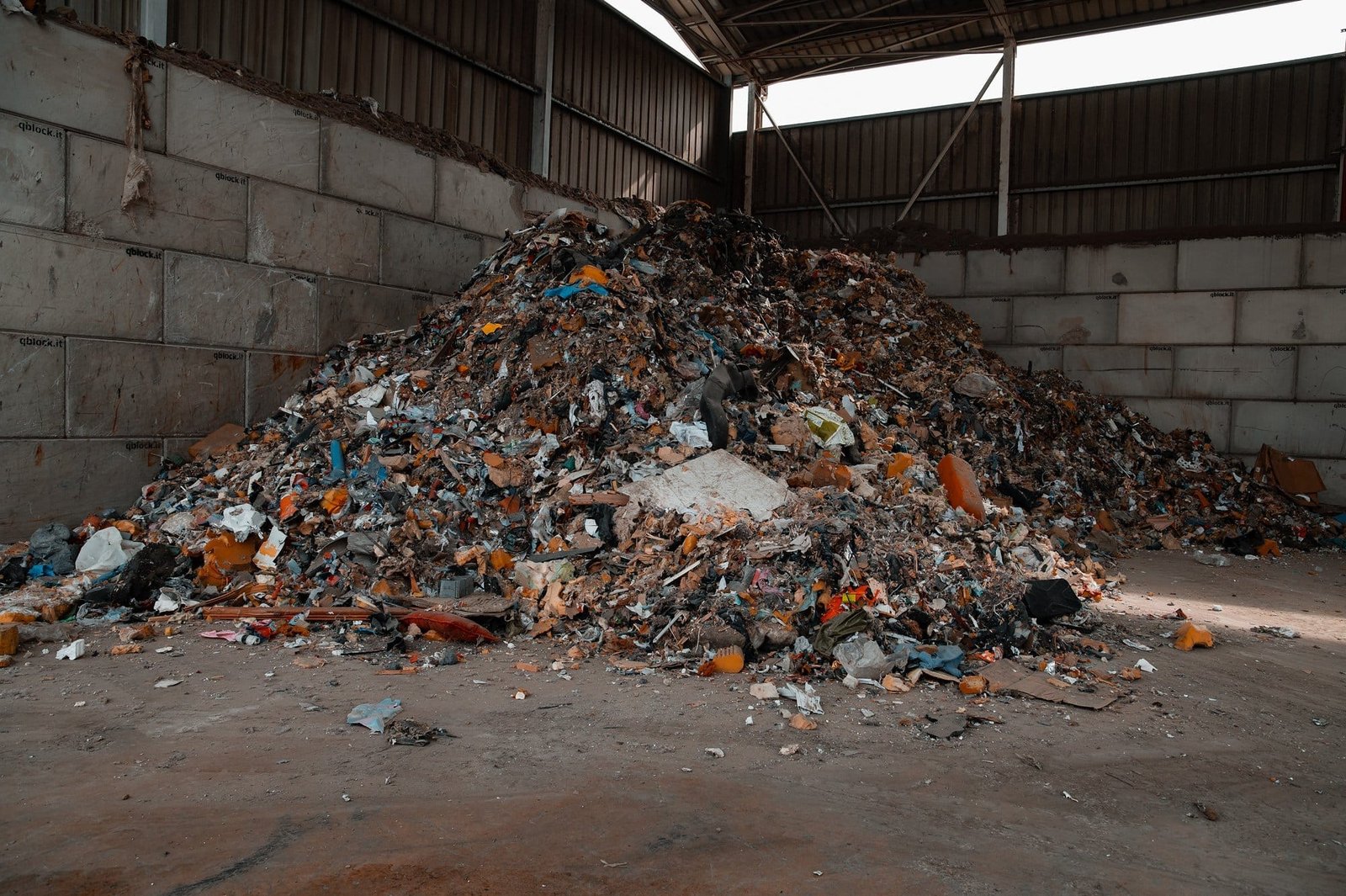
Waste valorisation: Even materials that cannot be directly reused or recycled can be valorised through innovative techniques. For example, demolition waste can be turned into solid recovered fuels (SRF) for energy or used in the production of alternative building materials such as recycled concrete blocks.
Economic and environmental benefits
The adoption of circular demolition brings a number of both economic and environmental benefits:
Saving Resources: By using existing materials instead of extracting new resources, circular demolition helps to preserve the planet's limited natural resources.
Reduction of Disposal Costs: By reusing and recycling materials, construction companies can save on waste disposal costs while enhancing their reputation as responsible actors.
Job Creation: Circular demolition requires specialist skills in deconstruction and materials recycling, creating job opportunities in sustainable construction.
Reducing the Environmental Footprint: By reducing the need to extract new resources and the amount of waste going to landfill, circular demolition helps mitigate the environmental impact of the construction industry.
Circular demolition is an essential step towards a more sustainable and resilient economy. By turning demolition from an act of destruction into an opportunity to create value through the recovery and reuse of resources, we can reduce the environmental impact of building work and promote more responsible management of the planet’s resources. Investing in circular demolition practices is not only an investment in a sustainable future, it also gives construction companies a chance to stand out in sustainable building.
Also read the article by Federico Della Puppa, head of Analysis & Strategy at Smart Land, published on e-construction. One figure says it all: “since 2000, demolition work on existing buildings has risen from 1.3% to 25%”.
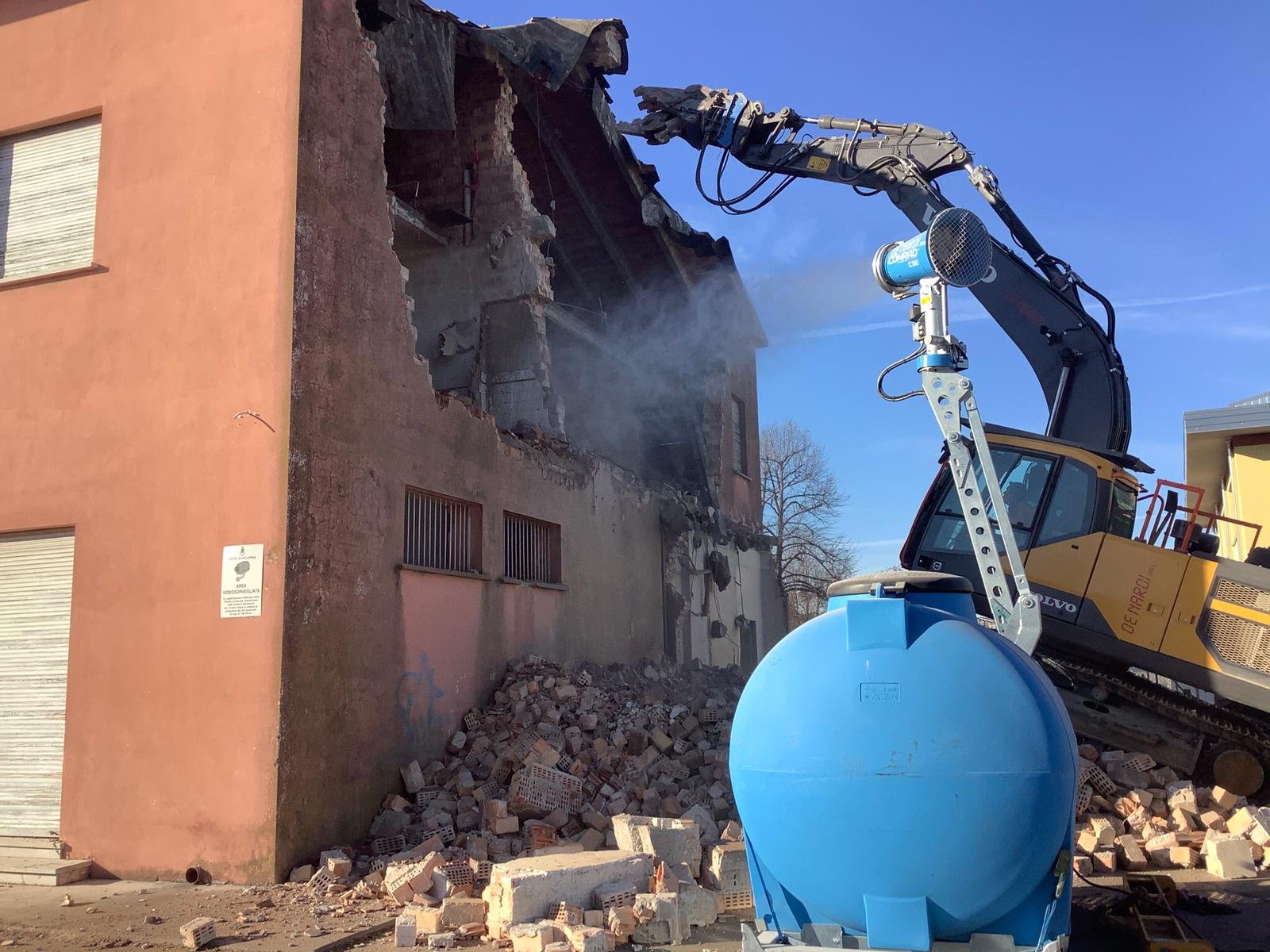
How dust suppression cannons support circular demolition
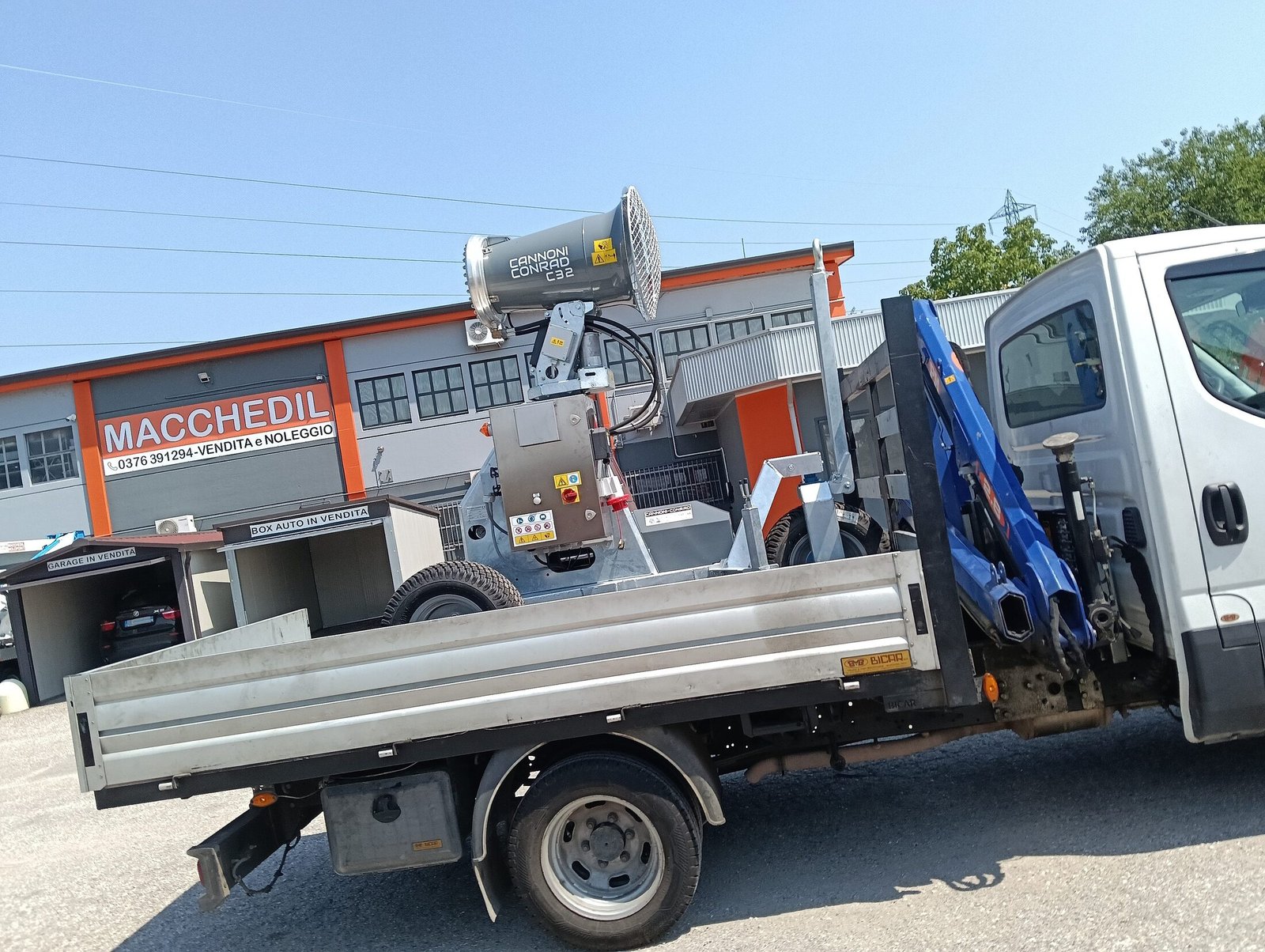
As devices designed to reduce the dispersion of dust into the air during various activities, including demolition, dust suppression cannons play a significant role in the transition towards a more environmentally friendly and sustainable approach.
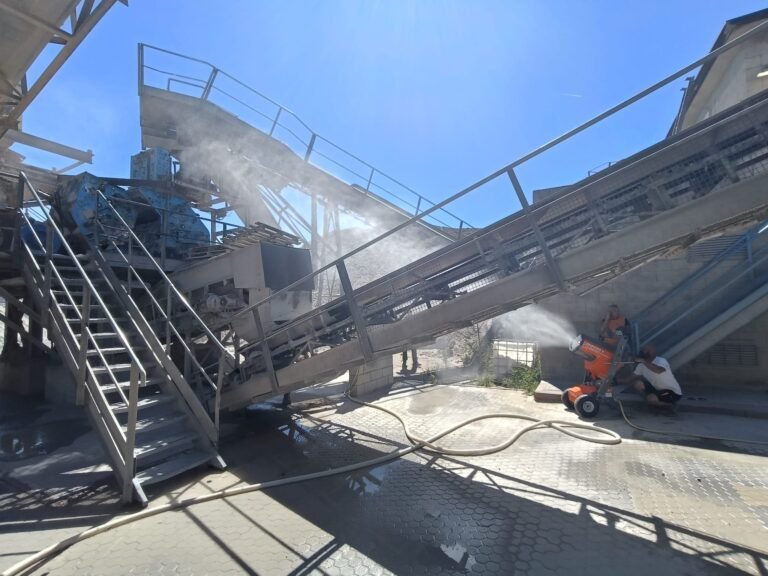
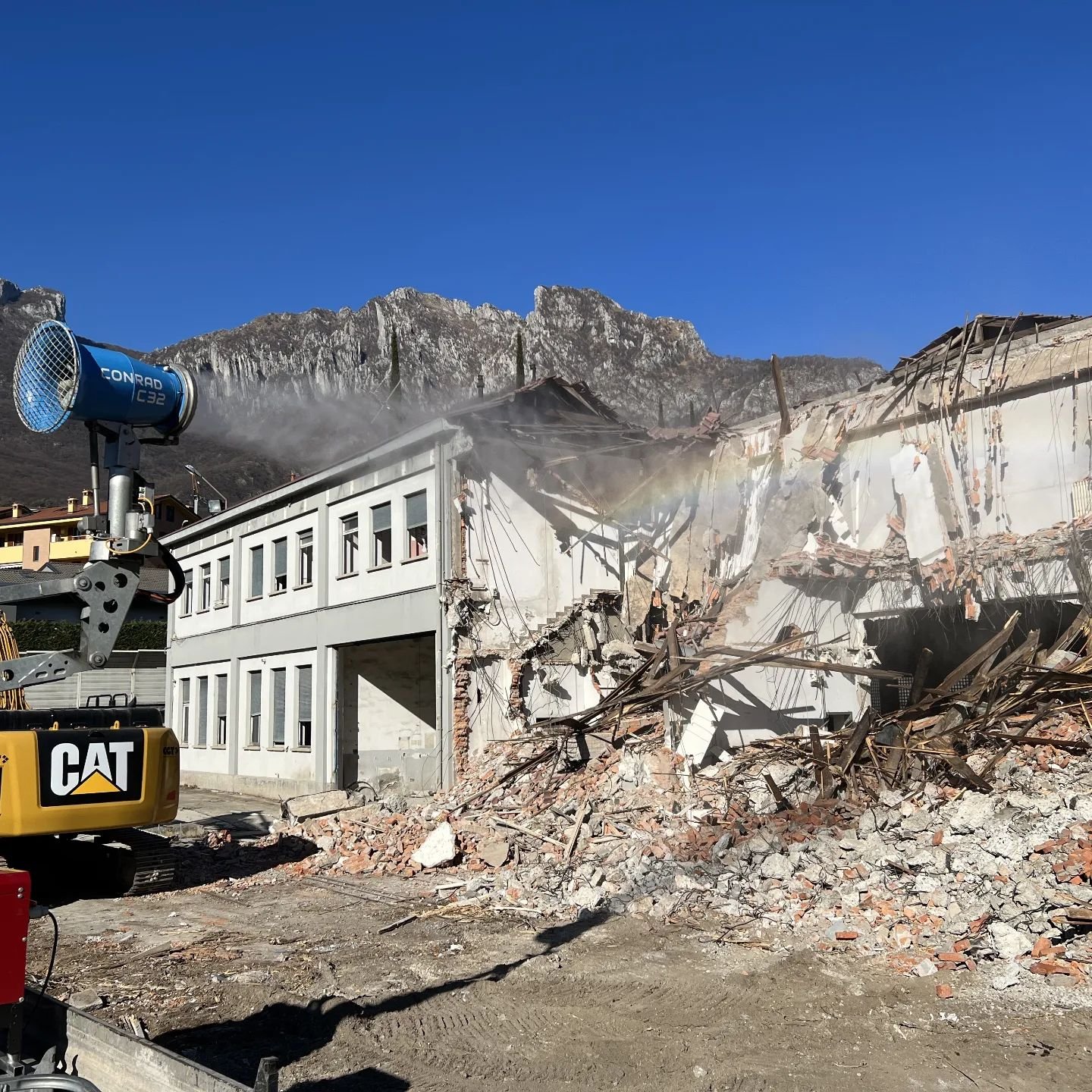
The dust suppression gun is a product that must be constantly present in the entire demolition chainduring the building demolition activity, during the loading of rubble and construction waste, during the screening of waste material in the landfill and during all loading and unloading operations involving dust generation.
Here’s how dust suppression cannons can contribute to this breakthrough:
Control of Dust Emissions: During the demolition of buildings or other structures, the movement of materials such as concrete, brick and other debris can generate a significant amount of fine particulate matter in the air. These particles can be harmful to human health and the surrounding environment. Dust suppression cannons can be used to spray water or aqueous solutions over work areas, trapping dust particles and thereby reducing their dispersion into the air.
Minimisation of Environmental Impact: By reducing the amount of airborne dust, dust suppression cannons help to preserve air quality and protect surrounding ecosystems. This is particularly important in densely populated urban areas, where demolition work can have a significant impact on public health and the environment.
Regulatory Compliance: Many environmental regulations require the control of dust emissions during demolition and construction work. The use of dust suppression cannons can help demolition contractors comply with these regulations and avoid penalties or fines.
Improvement of Working Conditions: By reducing the amount of dust in the air, dust suppression cannons improve working conditions for field workers. This can help to reduce the health risks associated with exposure to fine dust and improve workers’ overall wellbeing.
Efficiency in the Use of Resources: By using water or aqueous solutions to control dust, dust suppression cannons not only reduce air pollution but also utilise renewable and readily available natural resources. This makes them a relatively cost-effective and environmentally friendly solution for controlling dust emissions.
Reducing wastage of water resources: dust suppression cannons make more rational use of water. Misting uses only the water needed to bring the dust down, with no standing water, puddles or runoff. Far cheaper than using an ordinary hose.
The use of dust suppression cannons in the demolition sector can represent a significant step towards a more environmentally friendly and sustainable industry. By incorporating this technology into their demolition practices, companies can reduce the environmental impact of their operations, improve working conditions and contribute to better air quality for surrounding communities.