Dust management on construction sites is a fundamental aspect of ensuring the health and safety of workers and preventing damage to the surrounding environment. In Italy and in the European Union, there are several laws and regulations that regulate dust management on construction sites and in other work environments.
In particular, Legislative Decree No. 81 of 9 April 2008 'Consolidated Occupational Health and Safety Act' lays down the rules for protecting the health and safety of workers in all sectors, including construction sites. In addition, Directive 89/391/EEC 'Framework Directive on Health and Safety at Work' establishes the basic principles for improving the health and safety of workers in all sectors, including construction sites.
These regulations emphasise the need to prevent workers' exposure to dust, both during construction and demolition operations, as inhaling dust can cause short and long-term health damage.
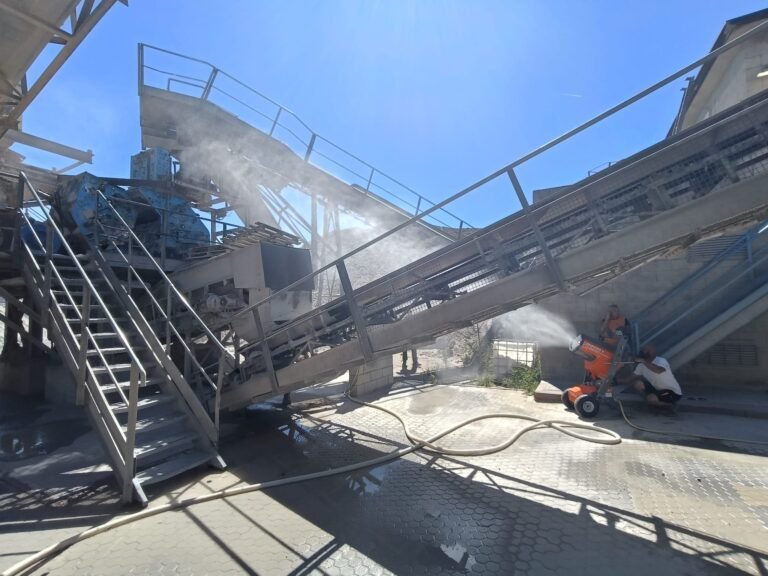
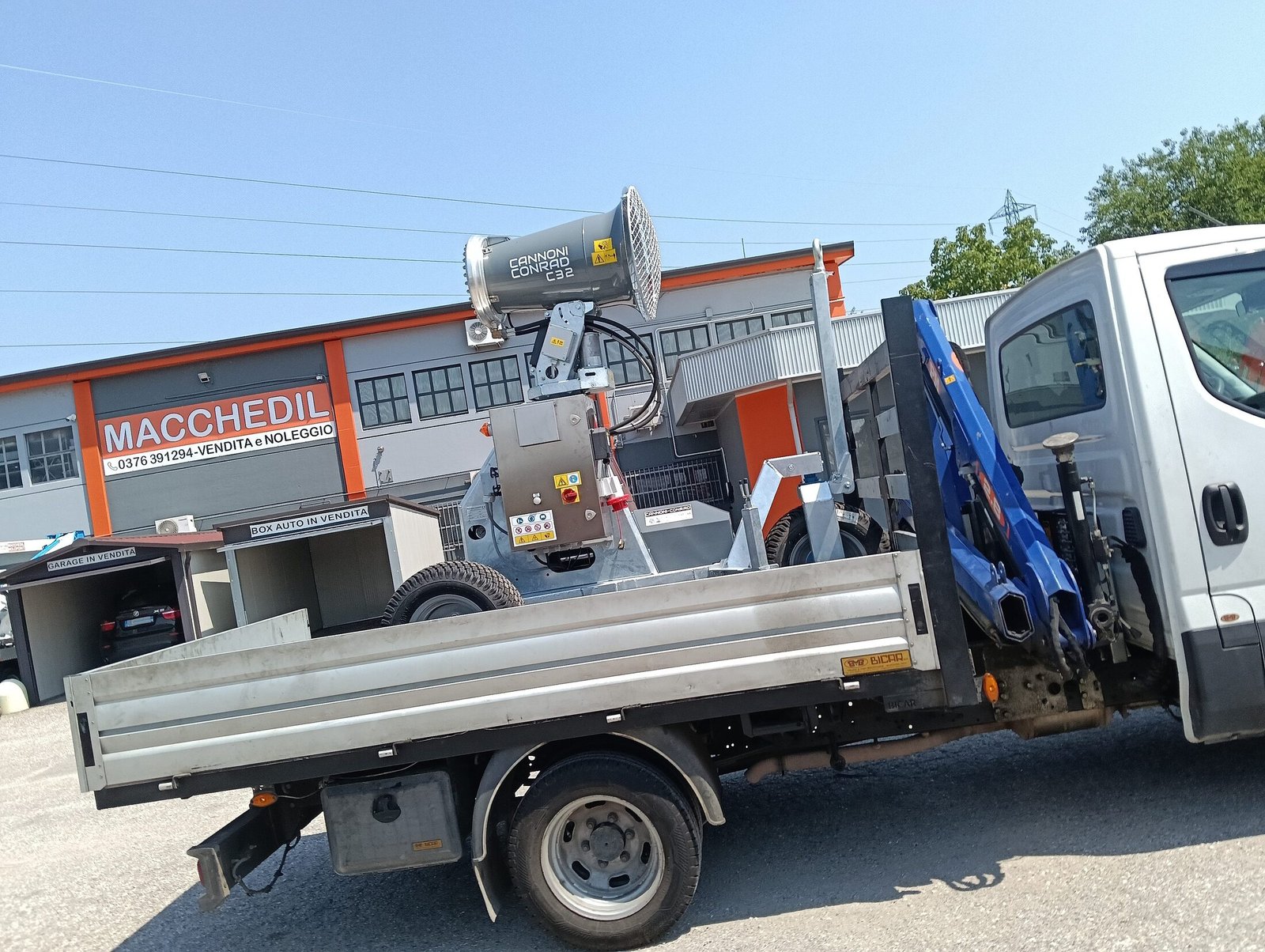
For this reason, companies are required to take measures to reduce dust emissions on construction sites. One of the most effective solutions is the use of dust suppression cannons. Dust suppression cannons, such as those made by Cannoni Conrad, reduce airborne dust by misting water.
In addition, European legislation also provides specific rules for the management of dust on construction sites. Directive 2006/42/EC 'Machinery Directive' regulates the safety of machinery and equipment used on construction sites and in other working environments, while Directive 2014/34/EU 'ATEX Directive' regulates the use of equipment and protective systems in potentially explosive environments, including those generated by dust.
Dust on site: risks to people, the environment and machinery
Dust on construction sites poses a significant risk to the health of workers as well as to the surrounding environment. Dust can be formed from materials such as cement, sand, stone, wood and other materials used in construction.
The main risk associated with dust on construction sites is the exposure of workers to hazardous substances, which can cause respiratory problems, eye, skin and respiratory tract irritation. Chronic exposure can also cause long-term respiratory diseases, such as silicosis and pulmonary fibrosis.
In addition to the health risks for workers, construction site dust can also pose a risk to the surrounding environment, as it can spread into the air and water, contaminating soil and local ecosystems.
To prevent dust hazards on construction sites, it is important that workers use appropriate personal protective equipment, such as dust masks and protective goggles. In addition, it is important that construction sites are adequately ventilated and that dust control methods, such as the use of water or vacuum systems, are used.
Dust on construction sites is not only a risk for workers but also for operating machines. The accumulation of dust on machines can cause malfunctions and reduce their service life.
To prevent dust hazards on machines, it is important to adopt dust control methods such as the use of extraction systems, washing the machines with water and the use of dust suppression cannons.
Dust suppression cannons are an effective solution for reducing dust on construction sites. These systems use water to capture dust particles in the air, preventing them from spreading into the surrounding environment. The use of dust suppression cannons has several advantages, such as:
- Reduced risk to workers' health: the system reduces workers' exposure to dust, protecting their health and preventing long-term respiratory diseases.
- Reduced risk to the surrounding environment: the system captures dust in the air, preventing it from spreading into the surrounding environment and preventing contamination of soil and local ecosystems.
- Reduced risk for operating machines: the use of dust suppression cannons prevents the accumulation of dust on machines, reducing the risk of malfunctions and prolonging their service life.
In conclusion, the use of dust suppression cannons is an effective way of reducing dust risks on construction sites, protecting the health of workers, the environment and operating machinery.
Can dust be eliminated?
In construction site activities, dust poses a threat to workers’ health and to machinery. It is not always possible to eliminate dust completely in these situations, but it can be significantly reduced by using dust control methods such as extraction systems, washing machinery with water and using dust suppression cannons.
Dust suppression cannons, in particular, use water to create a fine mist that traps dust particles in the air, preventing them from spreading into the surrounding environment. This system is particularly suitable for construction sites where large quantities of dust are present, or in enclosed spaces where the air cannot be easily ventilated.
The use of dust suppression cannons offers numerous advantages, such as reducing the risk to workers’ health, protecting the surrounding environment and minimising the risk of malfunctions in construction machinery. Furthermore, these systems are easy to install and operate, and can be adapted to the specific requirements of construction sites.
Ultimately, whilst it is not always possible to completely eliminate dust on construction sites, dust suppression cannons offer an effective solution for controlling or reducing it. The use of these systems can help to ensure a safer and healthier working environment, protecting the health of workers and construction machinery, and reducing the impact on the surrounding environment.
What Cannoni Conrad can do
Companies must comply with national and European regulations and take appropriate measures to reduce dust emissions on construction sites. Using dust suppression cannons, such as those made by Cannoni Conrad, is an effective way to reduce dust emissions on site and comply with the regulations in force.
In addition, it is important that companies also take other measures to manage dust on construction sites, such as the use of personal protective equipment (PPE) for workers, cleaning workplaces and constant air monitoring. In this way, the negative effects of dust on workers' health and the surrounding environment can be prevented.
Not least, it is important to emphasise that dust management on construction sites is also a critical aspect for the company's reputation. Indeed, companies that do not comply with dust regulations risk being penalised and losing the trust of their customers and business partners.
The dust suppression cannons manufactured by Cannoni Conrad can be used as a dust control solution on construction sites. These cannons use water to create a very fine mist that captures dust particles in the air, preventing them from spreading into the surrounding environment.
In particular, Conrad dust suppression cannons offer numerous advantages, including high efficiency and ease of use. These systems are capable of covering large areas with a fine mist that captures dust particles effectively and lastingly. From mobile systems at fixed systems , from dust suppression cannons with fans to systems for curtain misting. Conrad dust suppression cannons also have advanced controls that adapt the water flow to the specific needs of the site.
Cannoni Conrad can be a reliable and effective solution for controlling dust in the workplace, protecting the health of workers and machinery and reducing environmental impact.