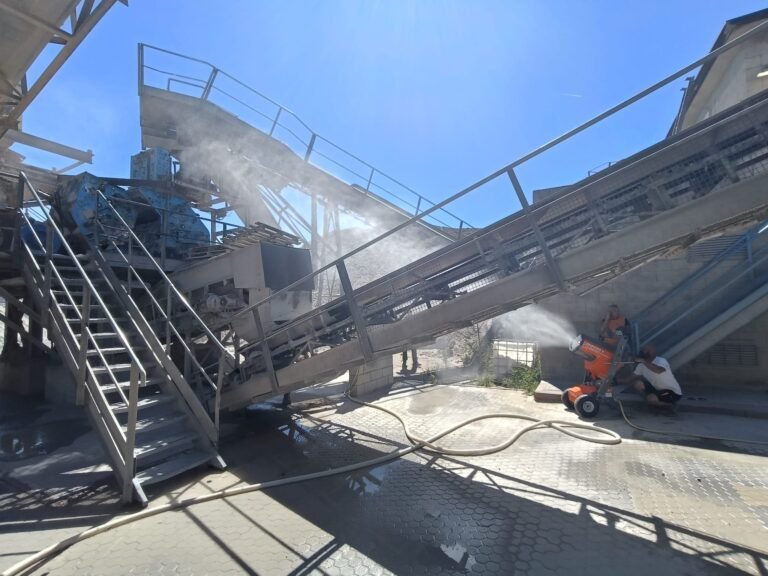
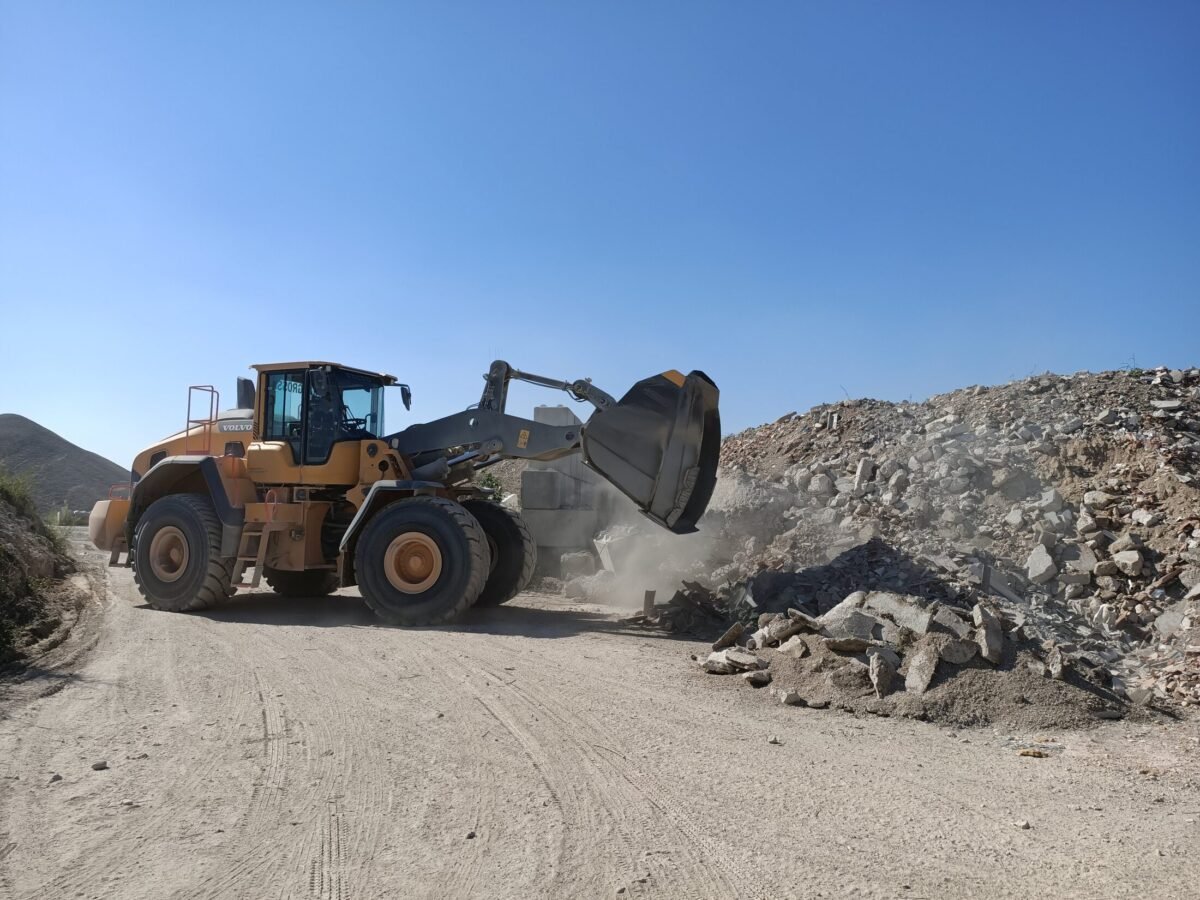
Imagine a quarry in full swing: trucks, excavators and other heavy vehicles are constantly moving around, raising huge amounts of dust into the air.
This dust can have harmful effects on those working on site and can also have negative consequences on the surrounding environment. In addition, dust can reduce visibility and increase the risk of accidents in the workplace.
Possible solutions

One of the most common ways to solve the problem of dust raised by vehicles is undoubtedly the use ofsprinklersthose in the agricultural sector.
The jets of water wet the ground, preventing the dust from rising.
At first glance, this method certainly seems quick and inexpensive. In reality, it hides (not even very well) several pitfalls. First of all, agricultural sprinklers are designed to irrigate crops, so they release large quantities of water, which is a good thing in agriculture because the aim is to water the fields abundantly so that the crops thrive. In a quarry things are different, which is why we can say that sprinklers are unsuitable and even counterproductive: the large quantities of water released onto the ground soak the soil excessively, solving the dust problem but creating a second, collateral problem: the mud. The vehicles will no longer lift dust but will fill their tyres with mud and distribute it on the road surface once they leave the quarry.
In this regard, Article 15 of the Highway Code lists the prohibited acts for motorists. In particular, it details how it is forbidden to carrying or spreading mudor debris even with the wheels of cars or motorbikes from accesses and branches. Otherwise, there is the administrative penalty of payment of a sum of between EUR 41 and EUR 168.
Let us also not forget that agricultural sprinklers consume large quantities of water and in the long term such a solution cannot be considered sustainable.
The right solution
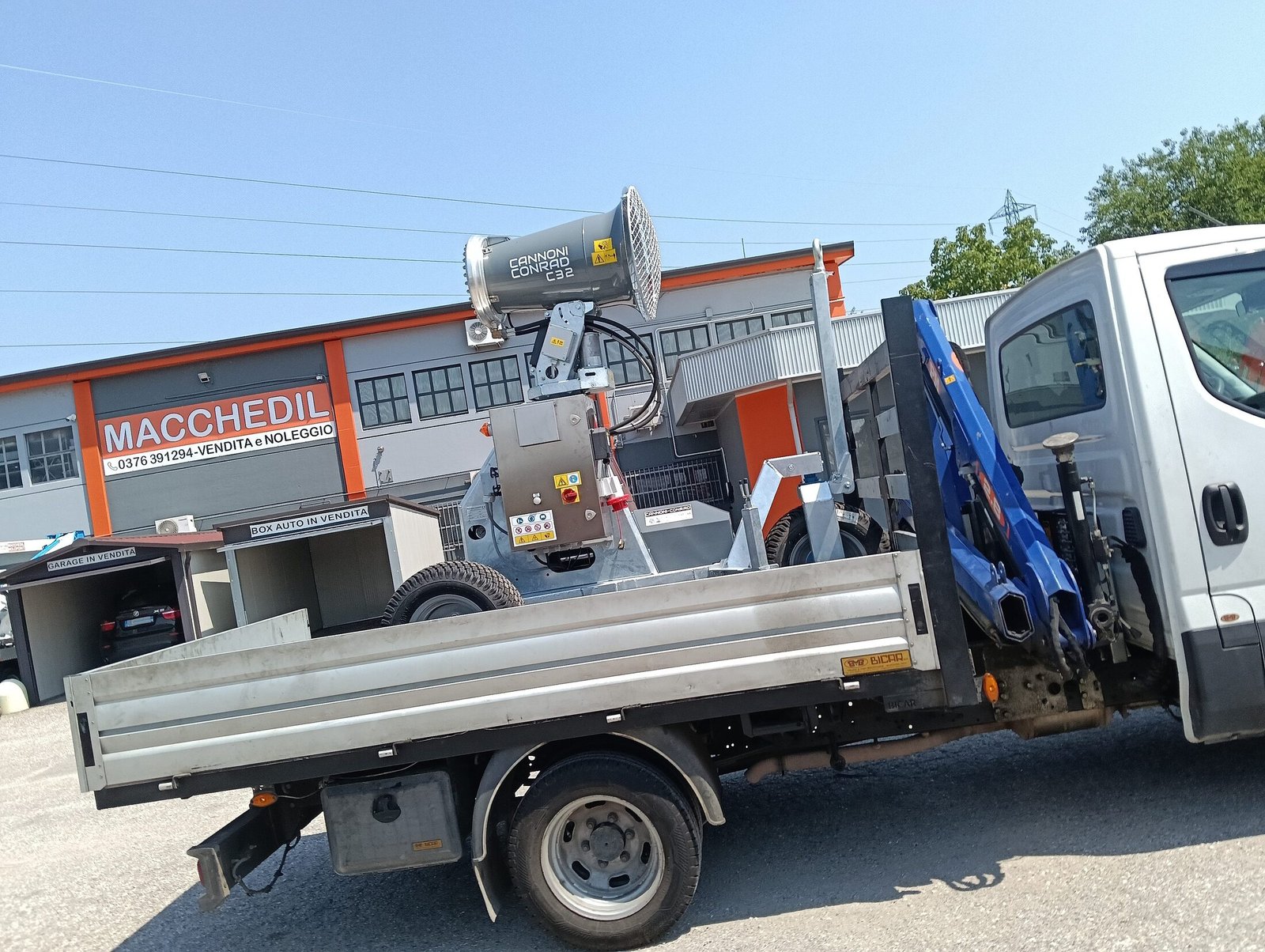
A possible ecological and conscientious solution to this problem is the use of dust suppression cannons. These devices are designed to spray finely-vapourised water into the air, which can effectively abate dust.
The principle is simple but incredibly effective: lightly vaporised water captures the dust particles in the air, causing them to fall to the ground. This significantly reduces the amount of dust in the air, improving the air quality for those working nearby and reducing the environmental impact. The sprayed water falls to the ground, moistening it, without creating puddles, rivulets of water or slush.
As well as improving air quality, dust suppression cannons offer other benefits. They can be easily adjusted to suit the specific requirements of the site, allowing precise control over the amount of water sprayed. Furthermore, they are often designed to be mobile and easily transportable, making them ideal for use in dynamic environments such as quarries and construction sites.
In essence, the use of dust suppression cannons represents a effective and efficient solution to tackle the problem of dust raised by vehicles in quarries and on construction sites. They not only improve working conditions for those working in the field, but also help to preserve the surrounding environment, proving to be a valuable investment in occupational health and safety.
Operational and environmental benefits of spraying
The installation of misting systems at vehicle passages brings tangible benefits:
Improved visibilityreducing the risk of accidents on site.
Lower fine dust content in the work area, protecting health.
Cleaning of vehicles and operational areasreducing mechanical wear and tear.
Alignment with environmental regulationsavoiding penalties and ensuring compliance.
A smart investment in site efficiency and sustainability.