



The Context of Multiutilities
In our experience working alongside Italian multi-utilities, we have learnt that the integrated management of local public services requires specialised skills and reliable technical partners. Companies active in the energy, integrated water service and environment sectors operate in complex supply chains, with plants and production sites that must guarantee operational continuity, regulatory compliance and environmental sustainability. Those who simultaneously manage waste, water and energy are confronted daily with very different requirements: atmospheric emissions, dust management, operator safety, optimisation of operating costs and compliance with authorisation requirements.
A site in a sensitive location
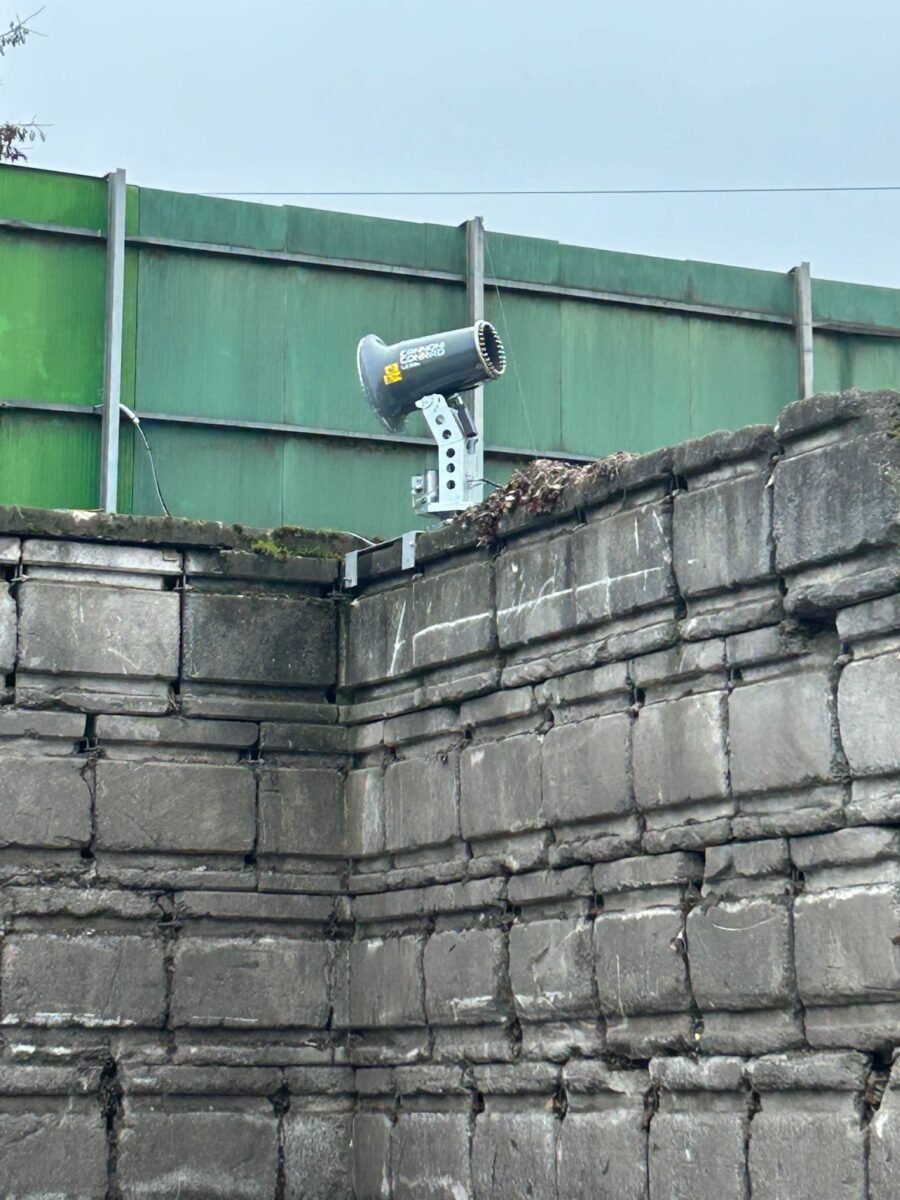
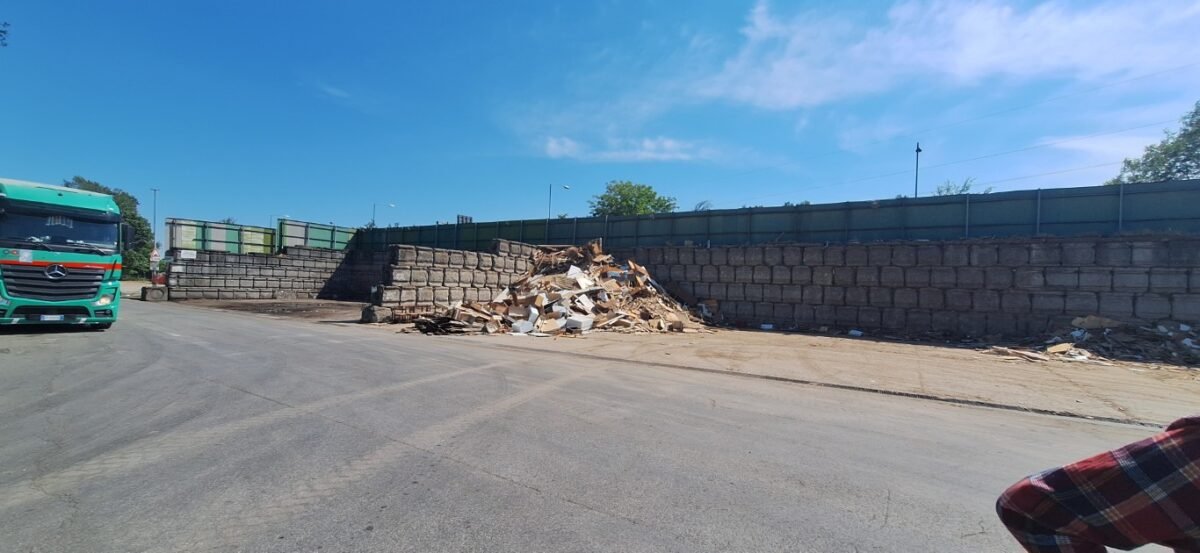
Our intervention took place at a storage site in the Bologna area, located in a particularly delicate position: the plant borders the motorway. This made dust control even more stringent. Outward dispersion was not only a critical environmental issue inside the site, but a potential visual and atmospheric impact in the vicinity of a high-traffic infrastructure, with obvious implications in terms of safety, image and management responsibility.
Technical analysis and inspection
As usual, we started with an in-depth technical inspection: analysis of the structure, dimensional survey of the bays, assessment of the useful heights and operating distances, and direct comparison with the plant personnel. Dialogue with those who work daily on the site is fundamental for us, because it allows us to understand not only the obvious problem, but also the operational dynamics that generate it.
Operational criticality
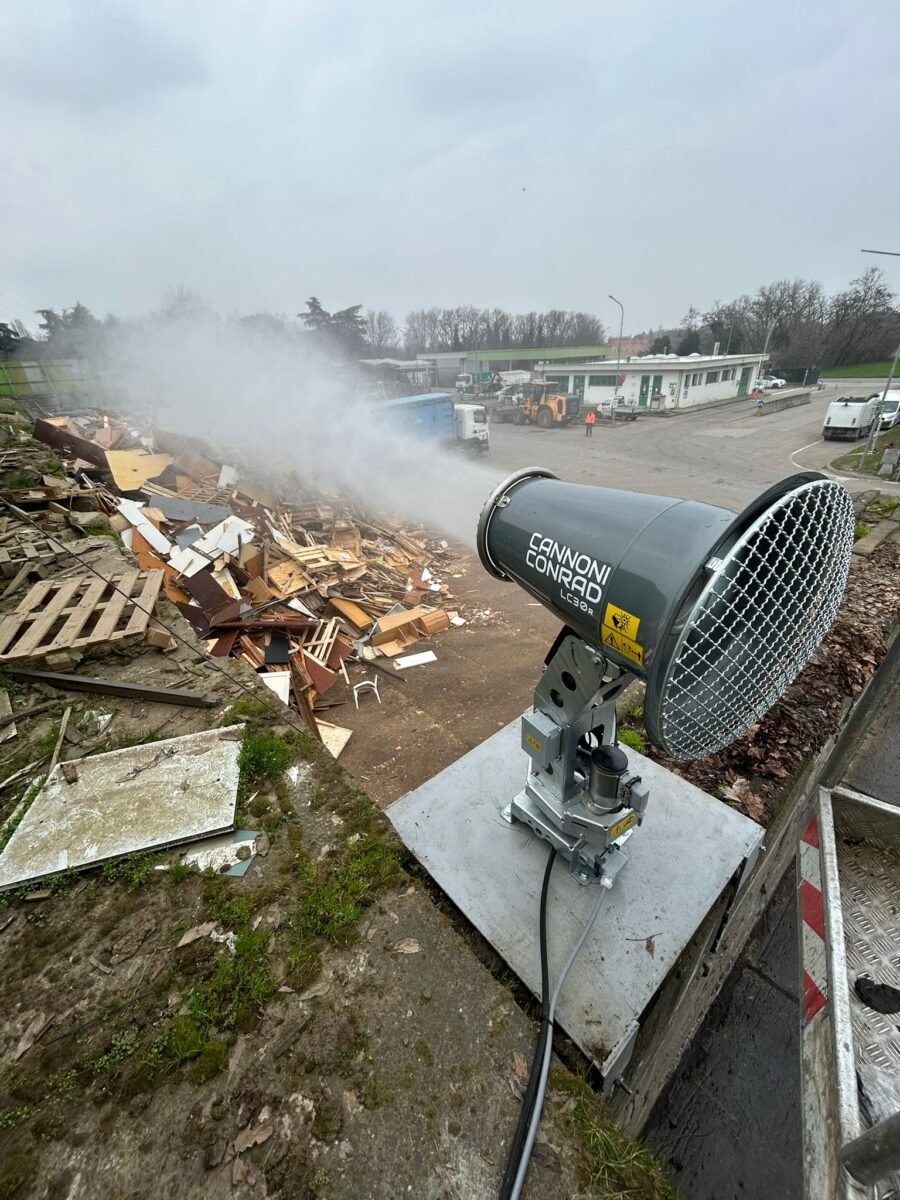
The issue concerned the control of dust in two separate bays: one for the storage of wood waste and the other for sweeping earth. During unloading with tipper trucks and during storage operations with a mechanical shovel, the fine material was being lifted, generating significant dispersion. In a context that was already delicate due to its proximity to the motorway, it was necessary to intervene with a solution capable of acting effectively and uniformly over the entire operational area.
From spray line to cannon
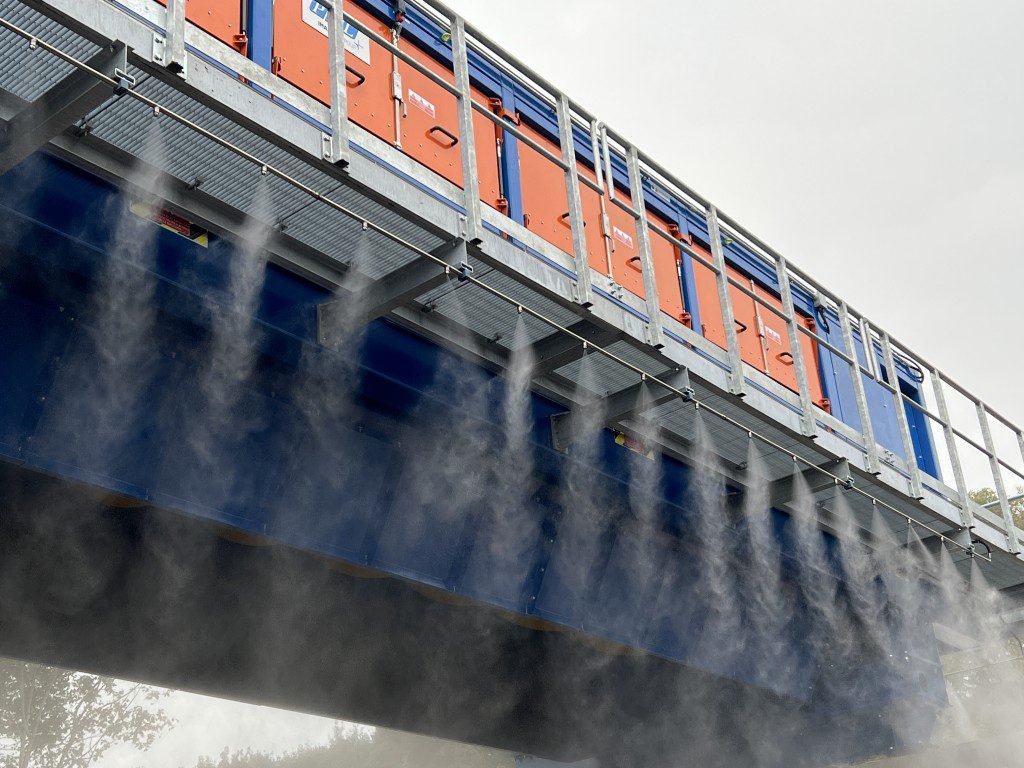
The customer had initially considered installing a perimeter spray line, a curtain solution positioned along the edge of the bays. During the survey, however, we highlighted a crucial aspect: the size of the piles and the depth of the area to be treated made this a partial solution. A fixed line would have mainly covered the area immediately adjacent to the perimeter, and would have been less effective in the innermost unloading and handling phases, precisely those most critical in terms of dust lift.
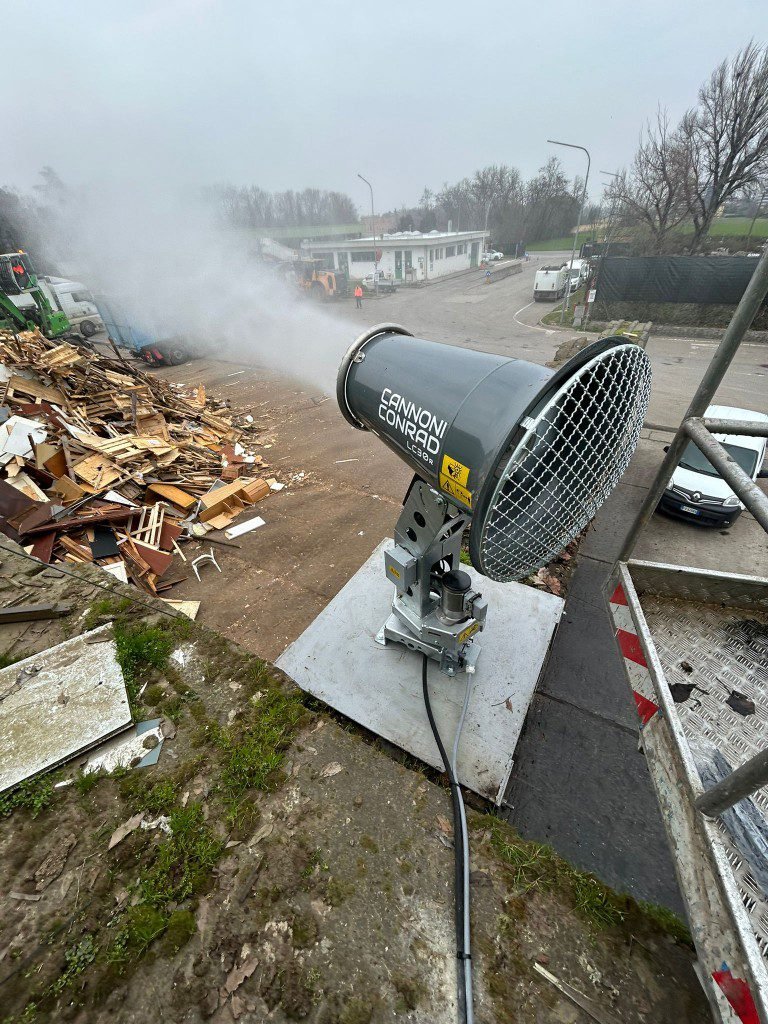
To ensure capillary and dynamic coverage, we therefore proposed a solution based on a spray cannon. The adjustable range and fine atomisation allow dust in suspension to be intercepted directly in the generation zone, adapting to the variability of the heaps and the different operational phases. We designed the positioning of a single cannon between the two bays, configured with a rotation angle of 180°, to serve both areas with one optimised installation point.
The installed machine: LC30R in BIKINI configuration
The machine of choice is a cannon model LC30R with a nominal throw of up to 30 metres, sized according to the depth of the bays and the height of the piles. The configuration adopted is the so-called “bikini” configuration, i.e. separate: the cannon with slewing ring installed at height, to maximise the working angle and distribution of the jet, while the pump block and control panel have been positioned on the ground. This solution allows easier maintenance, greater protection of electromechanical components and simplified operational management, while maintaining high atomisation performance and uniform coverage.
Automation and control
The system has been equipped with a radio control for manual operation by operators and integrated with a PLC for daily programming and the work break function. This makes it possible to modulate activation according to schedules and real operational needs, avoiding water wastage and optimising energy consumption.
Installation and Testing
The installation was carried out by our technical staff, equipped with a mobile workshop, lifting equipment and aerial platform. We took care of every step, from assembly to functional testing, verifying rotation, coverage and spray parameters under real operating conditions.
A result consistent with customer expectations
The result is a flexible system, consistent with the needs of a modern multi-utility plant: effective in containing dust, adapted to a sensitive logistical context such as the motorway, simple to manage and integrable into existing processes. It is in this approach - technical analysis, operational comparison and customised design - that we recognise the value of our collaboration with large local public service organisations.